Disclaimer: You are using Google Translate. The ICESCO is not responsible for the accuracy of the information in the translated language .

your opinion

User Feedback

Overall, how satisfied are you about the website?

    Extremely Dissatisfied Extremely Satisfied

    ICESCO Holds Second Session of Regional Workshop on Bridging Curricula to Tech Industry

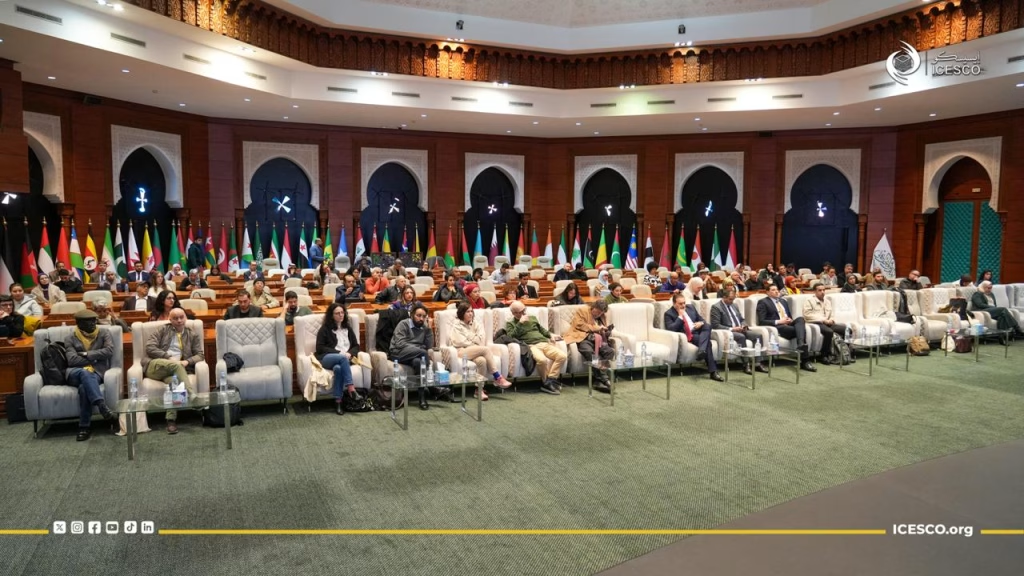
    The Islamic World Educational, Scientific and Cultural Organization (ICESCO), in partnership with Oracle’s Research and Development Center in Morocco, held the Second Session of the Regional Workshop on Bridging Curricula and the Tech Industry. The event aimed to support Member States’ efforts in keeping pace with digital transformations and accelerating the development of more effective innovation ecosystems. The workshop brought together about 50 university professors, researchers, and experts from engineering schools and higher education institutions.

    Held on Wednesday, February 18, 2026, in Tangier, Kingdom of Morocco, the workshop focused on identifying gaps between academic training and industry needs. Participants explored practical solutions to enhance graduates’ readiness for emerging technologies, improve their employability, and align university programs with the evolving job market.
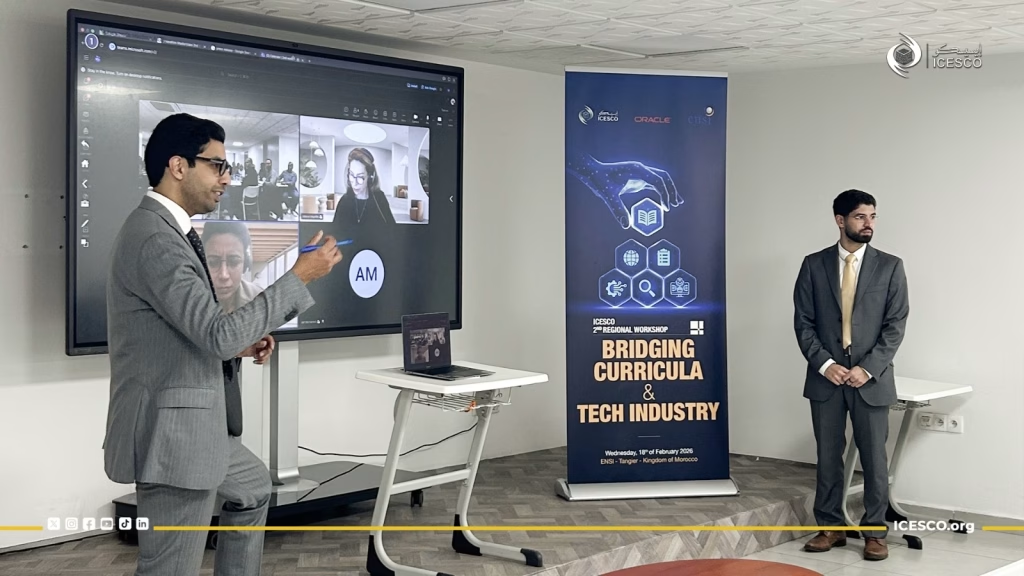
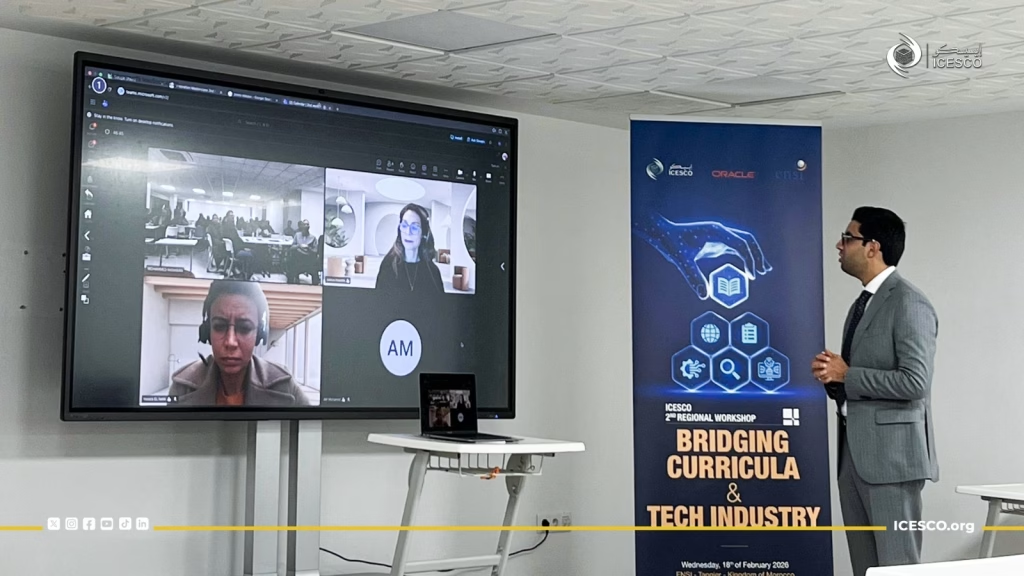
    In this context, Dr. Issam Krimi, an Expert from ICESCO’s Science and Environment Sector, delivered a presentation on the vital role of sustainable partnerships between universities and industries in modernizing curricula and linking them to productive realities, stressing that such collaborations foster innovation-driven development across Member States. Meanwhile, Mr. Mohammed Rashwan, from ICESCO’s Young Professionals Program, highlighted the importance of participatory approaches in program design to bring together academic and economic stakeholders.

    The workshop featured two presentations by representatives of the Oracle Center, namely Ms. Yousra Elhatib, Strategy Director, and Ms. Valerie Hayotte, Director of University Skills Development for Europe, the Middle East, and Africa. The two experts proposed practical integration pathways and areas of cooperation to bridge the divide between education and the workforce.

    At the close of the workshop, participants stressed the need to build sustainable coordination channels between academic institutions and industry partners and to develop collaboration models that incorporate hands-on training, career guidance, and up-to-date pedagogical content.
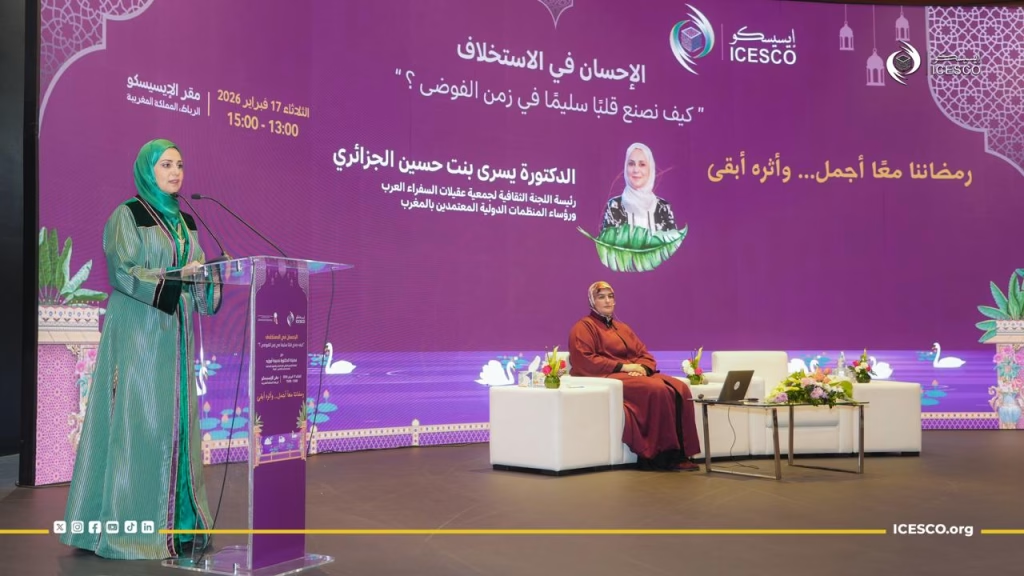
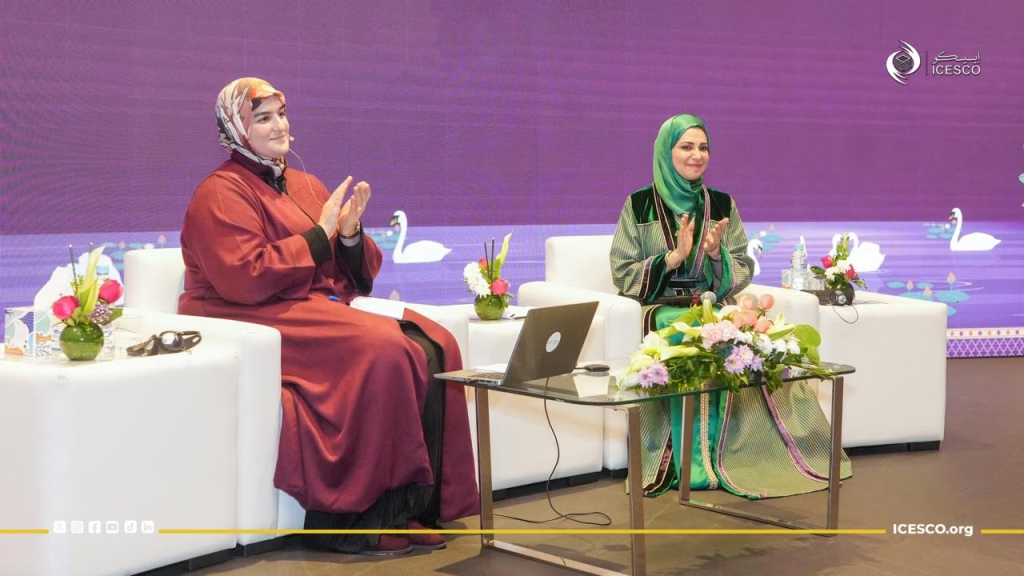
    ICESCO, Group of Spouses of Arab Ambassadors in Morocco Hold Scientific Meeting on “Excellence in Vicegerency”

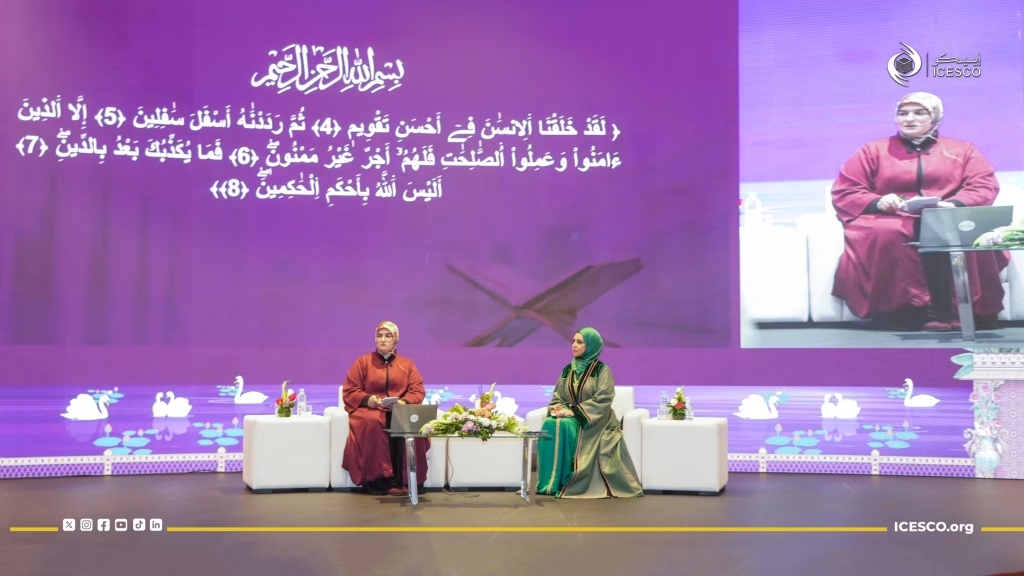
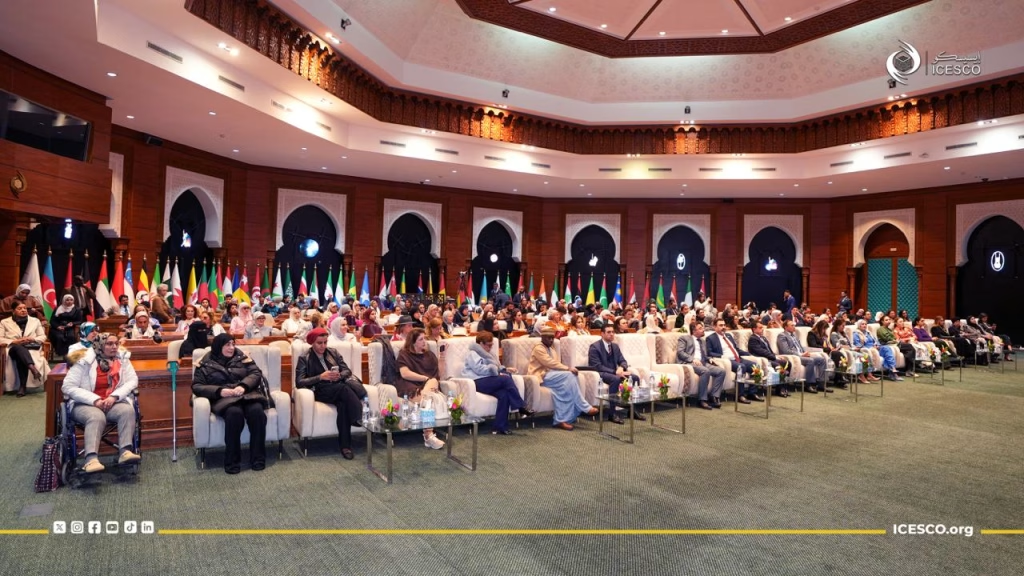
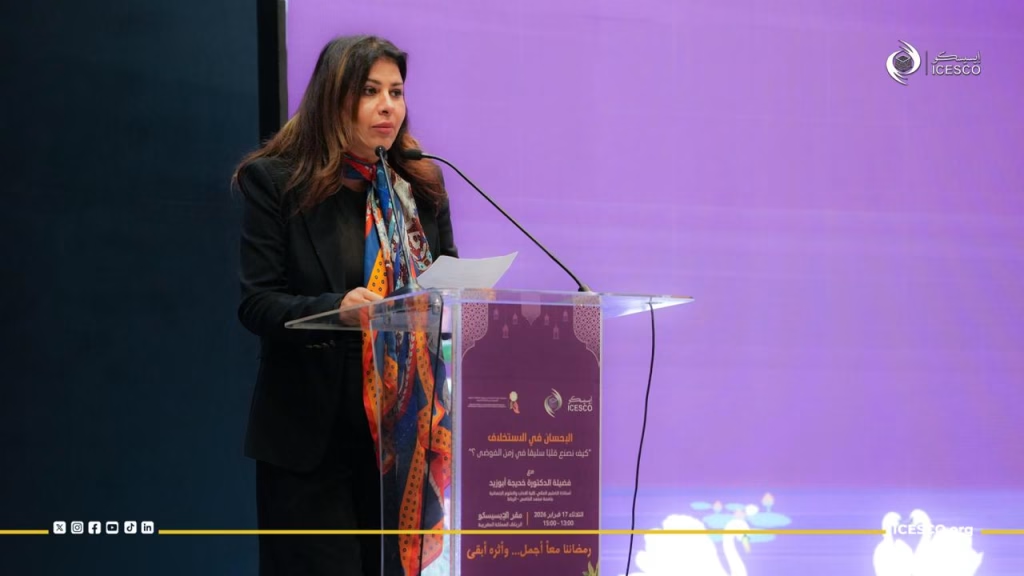
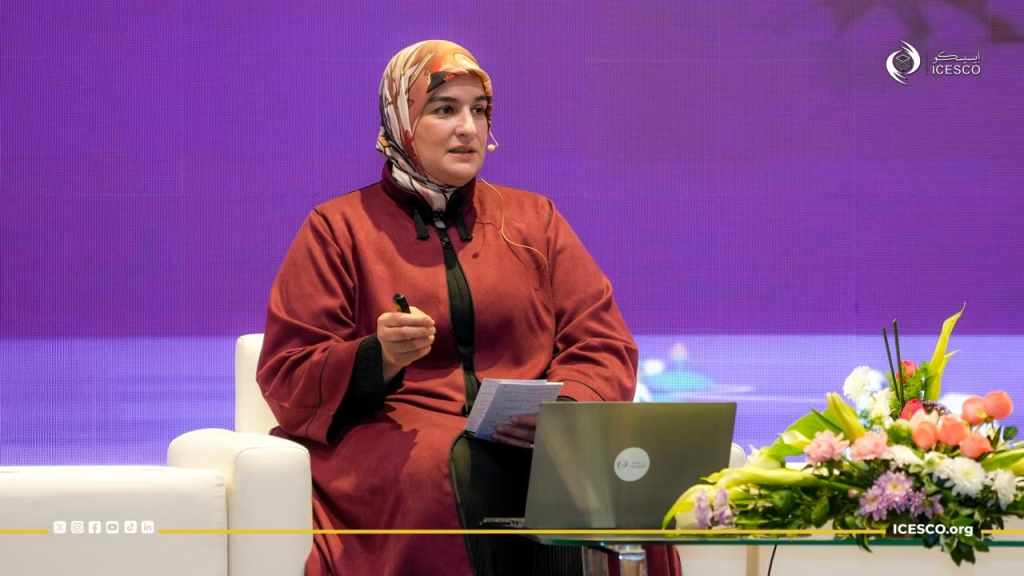
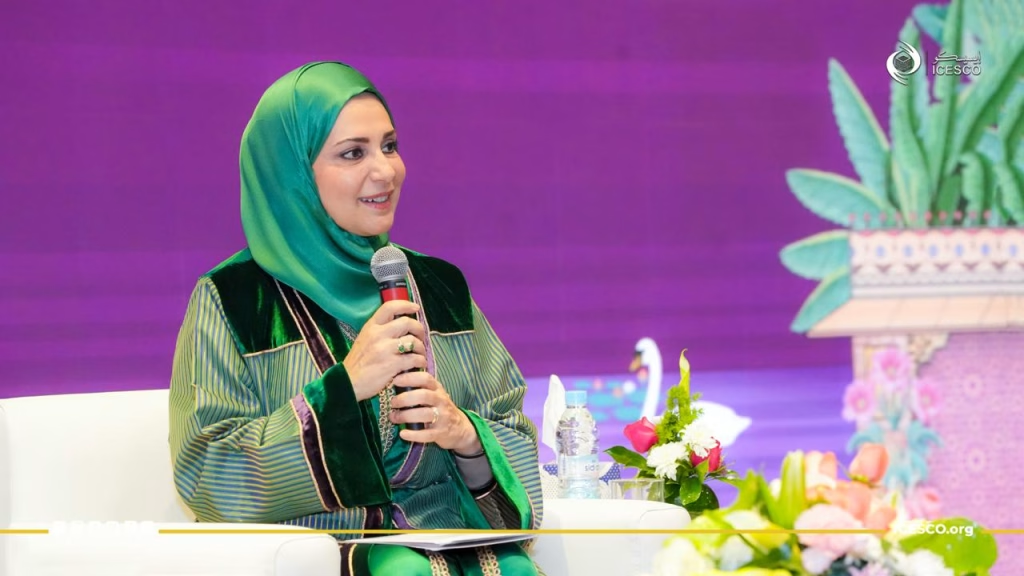
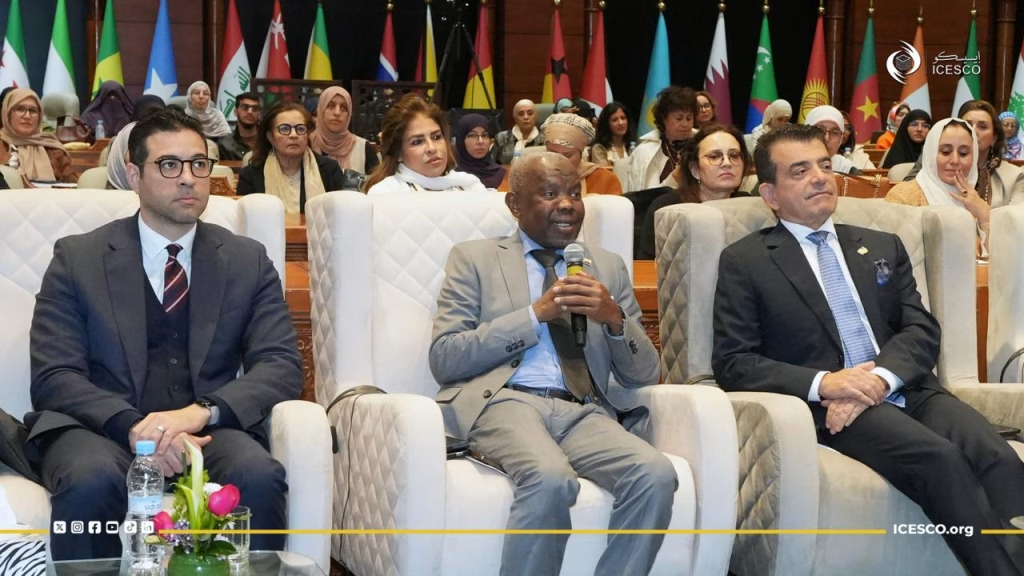
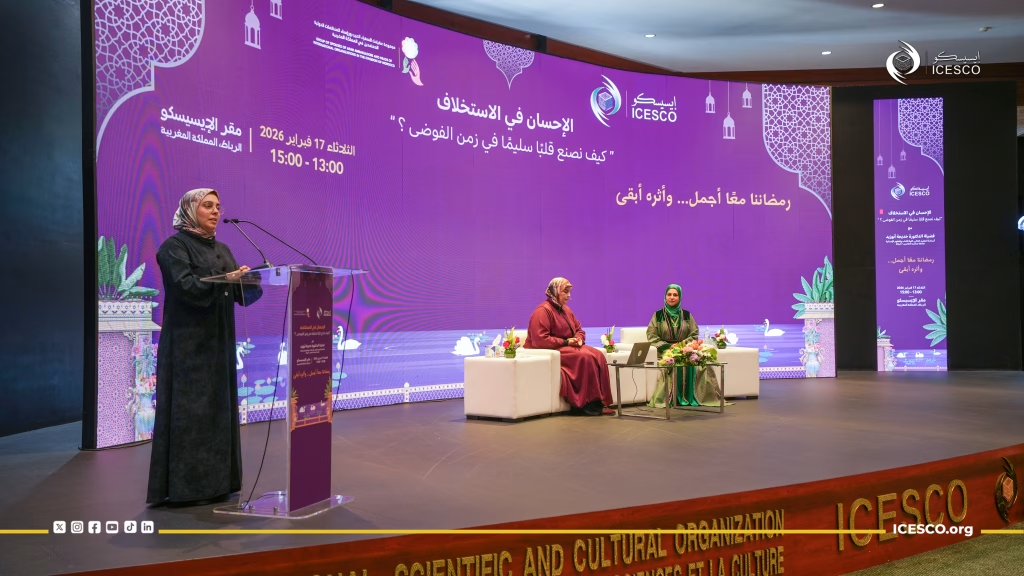
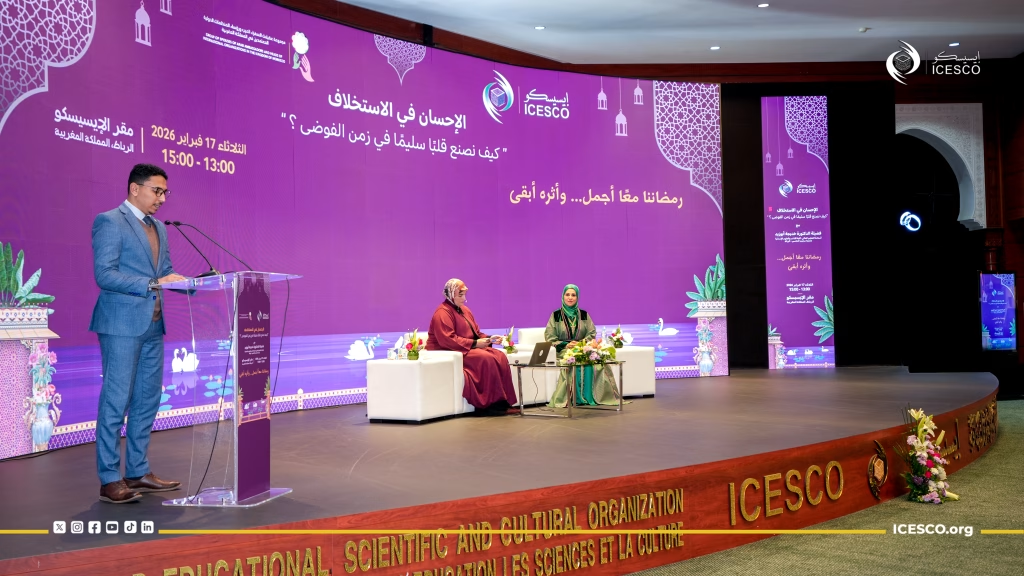
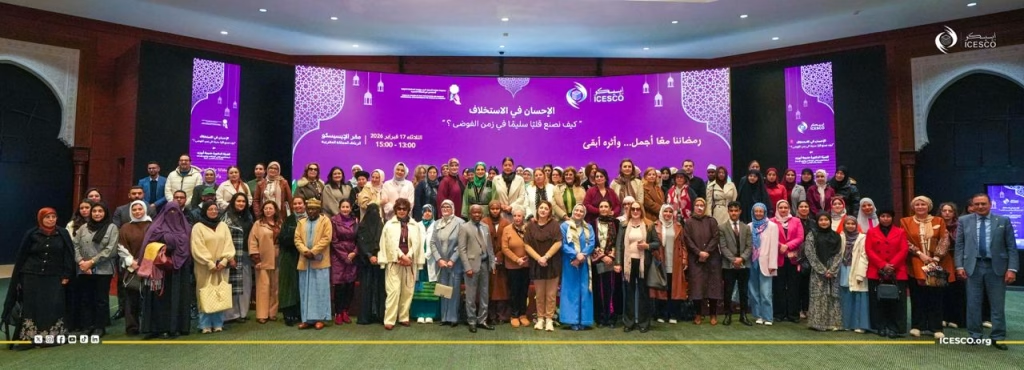
    The Islamic World Educational, Scientific and Cultural Organization (ICESCO), in cooperation with the Group of Spouses of Arab Ambassadors and Heads of International Organizations accredited to the Kingdom of Morocco, held a scientific meeting titled “Excellence in Vicegerency: How to Make a Healthy Heart in Times of Chaos.” The event featured a lecture by Dr. Khadija Abouzid, Professor of Higher Education at the Faculty of Letters and Human Sciences, Mohammed V University in Rabat, and was attended by Dr. Salim M. AlMalik, ICESCO Director-General, along with a number of ambassadors accredited to Morocco, members of the Spouses Group, and participants interested in intellectual, spiritual, and educational affairs.

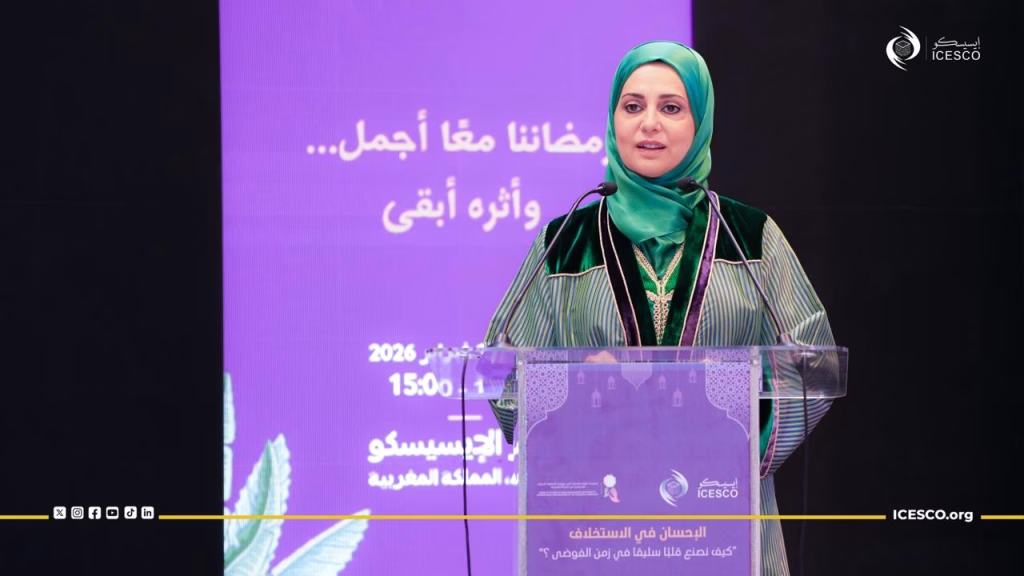
    The meeting, held on Tuesday, 17 February 2026, opened with recitations from the Holy Qur’an, followed by remarks from Ms. Rania Shobaki, Chairwoman of the Group. She highlighted the continued cooperation between ICESCO and the Group, stressing that this partnership reflects a shared commitment to organizing gatherings that combine knowledge- and value-based themes and address the questions facing modern humanity amid rapid global transformations.

    Dr. Yousra Bint Hussain AlJazairy, Chair of the Cultural Committee of The Group of Spouses of Arab Ambassadors and Heads of International Organizations accredited to the Kingdom of Morocco, stated that the meeting serves as a prelude to four lectures to be held every Tuesday during the month of Ramadan. She noted that the purpose of these lectures is to ensure complementarity among their themes to nurture the heart before the mind. She added that the challenges facing the world today are less a crisis of progress than a crisis of balance, calling for the restoration of the value system that reinstates human beings to their honored and responsible role as vicegerents of Allah on earth.

    At the beginning of her lecture, Dr. Abouzid emphasized that vicegerency is not a mere theoretical notion but a covenant that places an ethical and civilizational responsibility on human beings. She stated that humans are “honored trustees” and “entrusted vicegerents,” and that the path toward a sound heart requires awareness of this responsibility and alignment of daily conduct with the objectives of righteous action.

    Dr. Abouzid also reflected on human potential as illustrated in the story of Adam, peace be upon him, noting that the pillars of vicegerency include moral nature, the capacity for learning and development, and the faculty of reflection and discernment that enables one to read reality with clarity, link actions to purpose, and build inner balance that protects against chaos and supports efforts toward reform.

    At the conclusion of the meeting, participants engaged with the themes of vicegerency, excellence, and the cultivation of value-based balance. A question-and-answer session followed, during which practical guidance was shared on refining the self and strengthening moral resilience in times of turbulence.

    ICESCO, Syria Discuss Arrangements for Implementing Partnership Agreement to Support Syrian Educational Infrastructure

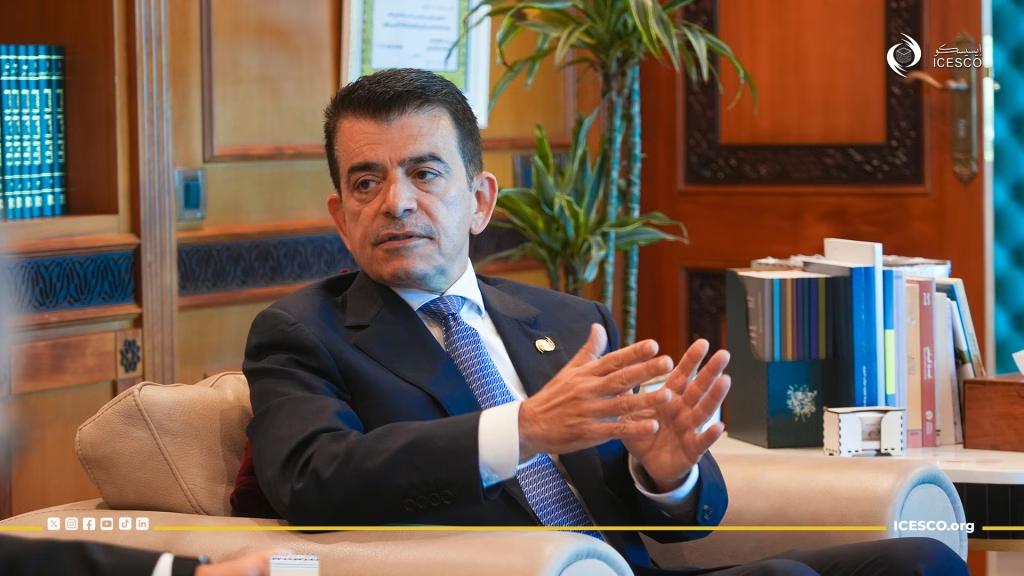
    Director-General of the Islamic World Educational, Scientific and Cultural Organization (ICESCO), Dr. Salim M. AlMalik, and the Minister of Education of the Syrian Arab Republic and Chairman of the Syrian National Commission for Education, Science and Culture, Dr. Mohammed Abdulrahman Turko, discussed mechanisms for implementing the tripartite partnership agreement to support educational infrastructure in Syria, signed between ICESCO, the Syrian Ministry of Education, and the Ministry of Science and Education of the Republic of Azerbaijan.

    During the meeting, held on Tuesday, 17 February 2026, at ICESCO headquarters in Rabat, Dr. AlMalik affirmed that the agreement falls within joint efforts to advance the education system in Syria and support its recovery as an ICESCO Member State, noting that this agreement serves as a model for launching similar initiatives in other Islamic world countries facing comparable challenges, thereby promoting solidarity and cooperation among Member States.

    For his part, Minister Turko expressed full confidence in ICESCO’s ability to oversee the implementation of the agreement’s provisions, based on an inclusive approach that ensures benefits are extended to all Syrian regions while prioritizing the most affected areas. He also reviewed national efforts to strengthen the education sector and shape a better future for coming generations.

    By virtue of the tripartite partnership agreement, both sides agreed to outline the general framework for the implementation phases and the mechanisms for exchanging expertise between the two parties.

    The meeting was attended by Dr. Abdelilah Benarafa, Deputy Director-General of ICESCO, and from the Syrian side, Mr. Abdul Karim Qadri, Secretary-General of the Syrian National Commission for Education, Science and Culture.

    ICESCO Director-General Receives Azerbaijan’s Minister of Science and Education to Discuss Scientific Partnership

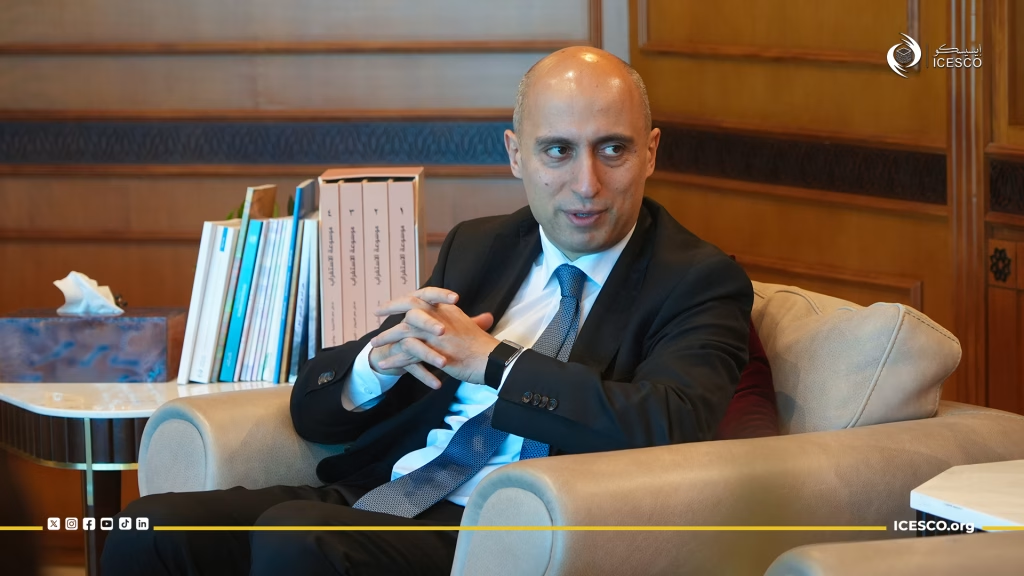
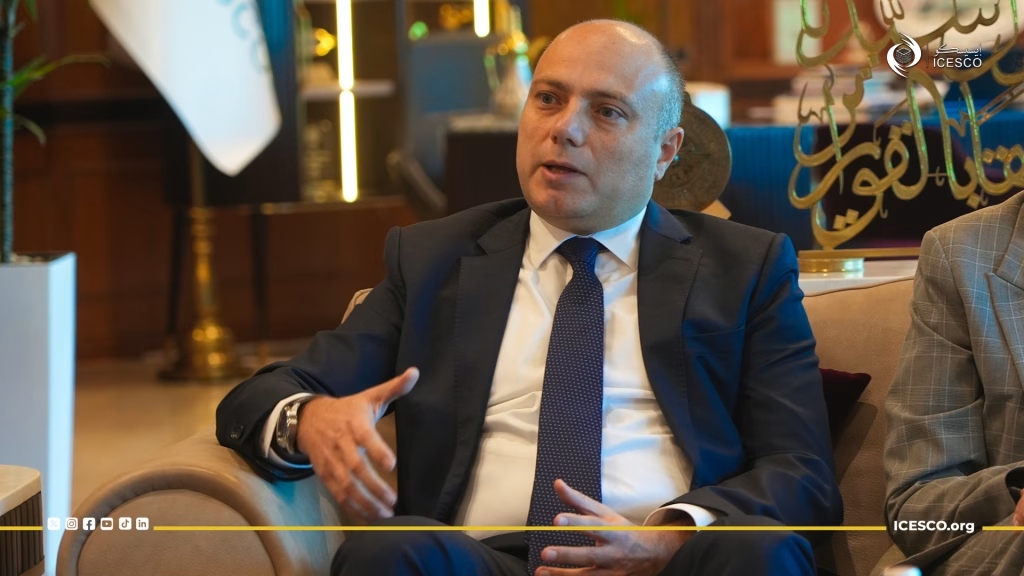
    Dr. Salim M. AlMalik, Director General of the Islamic World Educational, Scientific and Cultural Organization (ICESCO), met on Tuesday, 17 February 2026, with Mr. Emin Amrullayev, Minister of Science and Education of the Republic of Azerbaijan, to discuss ways to enhance cooperation in scientific research and knowledge exchange between ICESCO Member States and Azerbaijan.

    During the meeting, held at the Organization’s headquarters in Rabat and attended by Ambassador Nazim Samadov, Azerbaijan’s Ambassador to Morocco and his country’s Permanent Delegate to ICESCO, Dr. AlMalik expressed his appreciation for Azerbaijan’s confidence in ICESCO and its continued support for the implementation of pioneering initiatives, programs, and projects in the fields of education, science, and scientific research in ICESCO Member States, foremost among them the signing of the strategic partnership agreement to support educational infrastructure in Syria, aimed at rehabilitating 100 damaged schools and building 10 new educational facilities.

    Dr. AlMalik noted that the Organization has attracted numerous competencies and talents from Azerbaijan, with the aim of building bridges of cooperation and professional and knowledge exchange between Central Asian countries and the rest of the Islamic world.

    Mr. Amrullayev reviewed the Ministry’s efforts to strengthen the education system through the development and implementation of several initiatives and the integration of universities and research centers into the scientific research ecosystem. Moreover, he expressed his country’s willingness to develop further programs and projects in science, technology, engineering, and mathematics, and to enhance university and student exchange.

    Representing ICESCO at the meeting were Mr. Anar Karimov, Head of the Partnerships and International Cooperation Sector; Dr. Dinara Guliyeva, Head of the Human Development Division at the Social and Human Sciences Sector; and Mr. Murad Aliyev, Expert in the Partnerships and International Cooperation Sector.

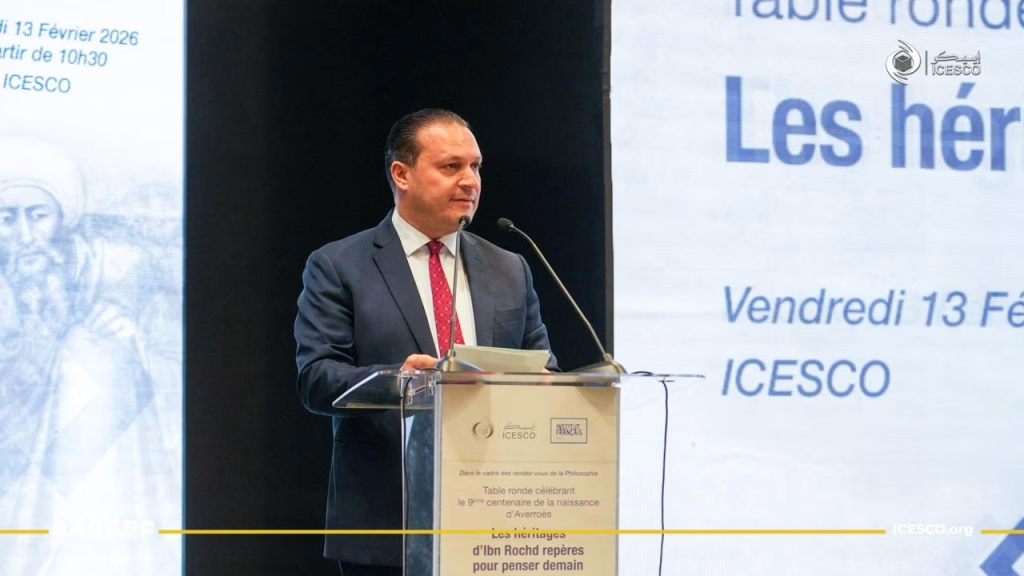
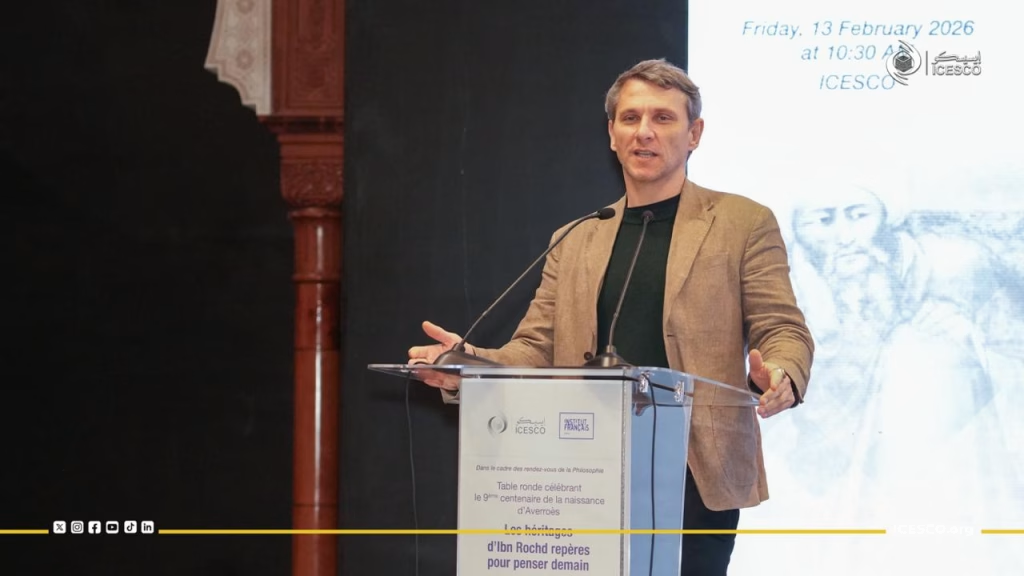
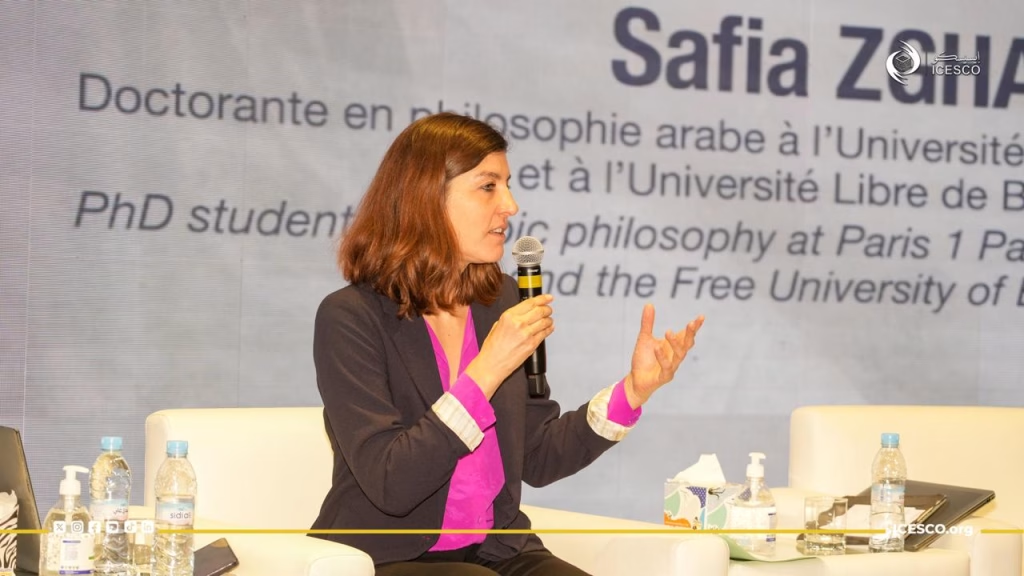
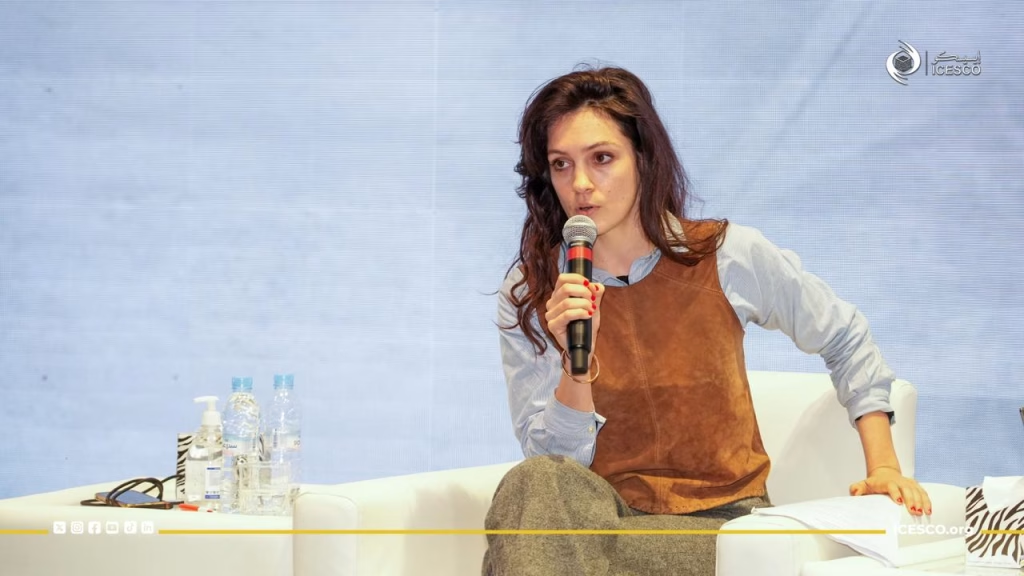
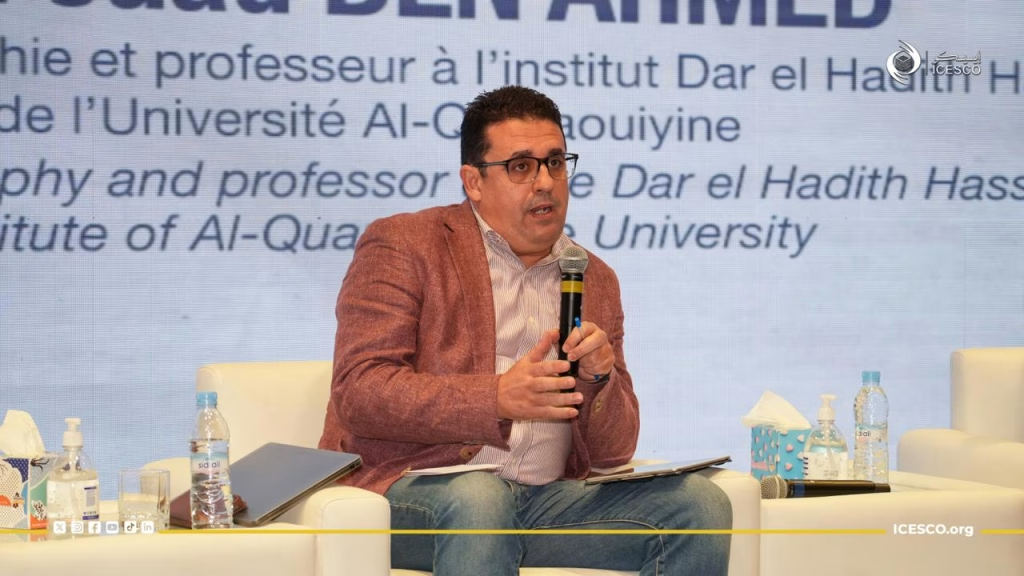
    ICESCO Holds Roundtable Celebrating Ibn Rochd’s Intellectual Legacy with Philosophers and ResearchersRabat: 13 February 2026

    The Islamic World Educational, Scientific and Cultural Organization (ICESCO) held on Friday, 13 February 2026, at its headquarters in Rabat, a roundtable celebrating the 9th centenary anniversary of the birth of Ibn Rochd, titled “The Legacy of Ibn Rochd: Landmarks for Thinking Tomorrow”. The event was organized in partnership with the French Institute in Morocco and brought together a distinguished group of philosophers, researchers, and specialists in Medieval Thought.
    This initiative is part of the “Philosophical Encounters” program launched by ICESCO’s Center of Strategic Foresight and Artificial Intelligence, aiming to provide a space for intellectual dialogue and the exchange of views on issues of philosophy and knowledge, while deepening debate on philosophical heritage and its continually renewed questions.
    In his opening remarks, Dr. Kais Hammami, Director of the Center of Strategic Foresight and Artificial Intelligence, stressed that commemorating the 9th centenary anniversary of the birth of Ibn Rochd is an invitation to revisit a body of thought whose modernity remains striking. He recalled that certain intellectual figures constitute a living human heritage whose reinterpretation is essential for understanding present challenges and contributing to shaping future choices.

    Dr. Hammami highlighted the importance of engaging with Ibn Rochd’s thought at a time of technological, environmental, and social transformations, emphasizing the need to place reason at the core of understanding the world and interpreting its phenomena. He added that foresight is not merely a predictive technique but a long-term intellectual culture.

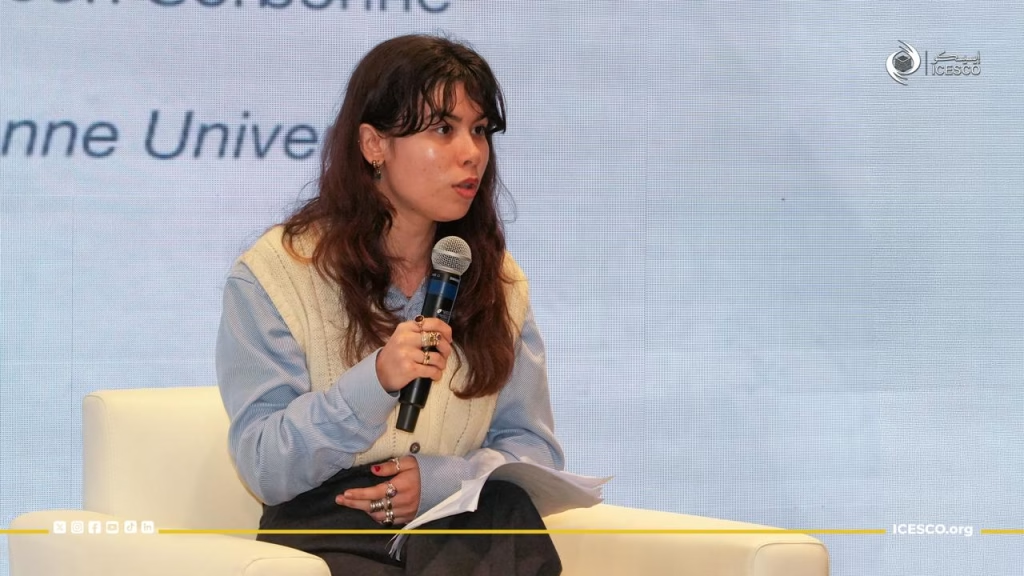
    For his part, Dr. Jean-Baptiste Brenet, French philosopher and Professor of Arabic Philosophy at Paris 1 Panthéon-Sorbonne University, noted that Ibn Rochd’s works, which have not yet all been edited and published, have had a profound impact on various intellectual and religious traditions. He added that each era returns to Ibn Rochd to question its own concerns, including contemporary issues related to Artificial Intelligence.

    The roundtable was moderated by Dr. Pauline Koetschet, Director of the Department of Arabic Studies at the French Institute for the Near East (IFPO). The sessions featured specialized scholarly presentations, during which Dr. Fouad Ben Ahmed, Professor of Philosophy at Dar Al-Hadith Al-Hassania in Morocco, offered a critical reading of the thesis of the “death of philosophy in Islam after Ibn Rochd,” arguing that it is based on a reductive historical conception and calling for moving beyond simplistic interpretations of intellectual history.

    Safia Zghal, researcher in philosophy at Paris 1 Panthéon-Sorbonne University, examined modern uses of the figure of Ibn Rochd through the early twentieth-century debate between Mohammed Abdo and Farah Anton, showing how each relied on Ibn Rochd to defend a distinct vision of the relationship between religion, reason, and modernity.

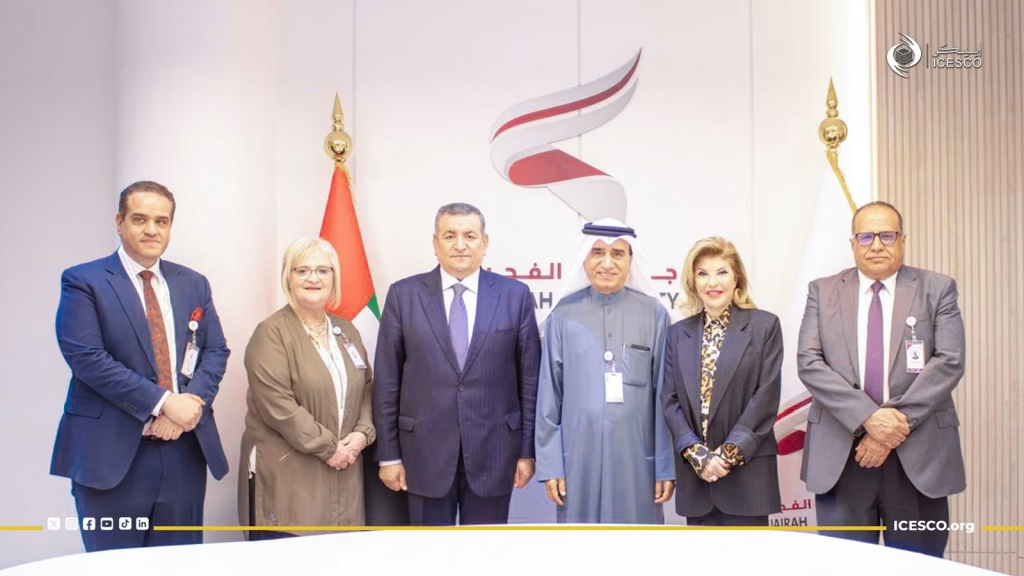
    ICESCO, Fujairah University Explore Cooperation Avenues in Media Literacy

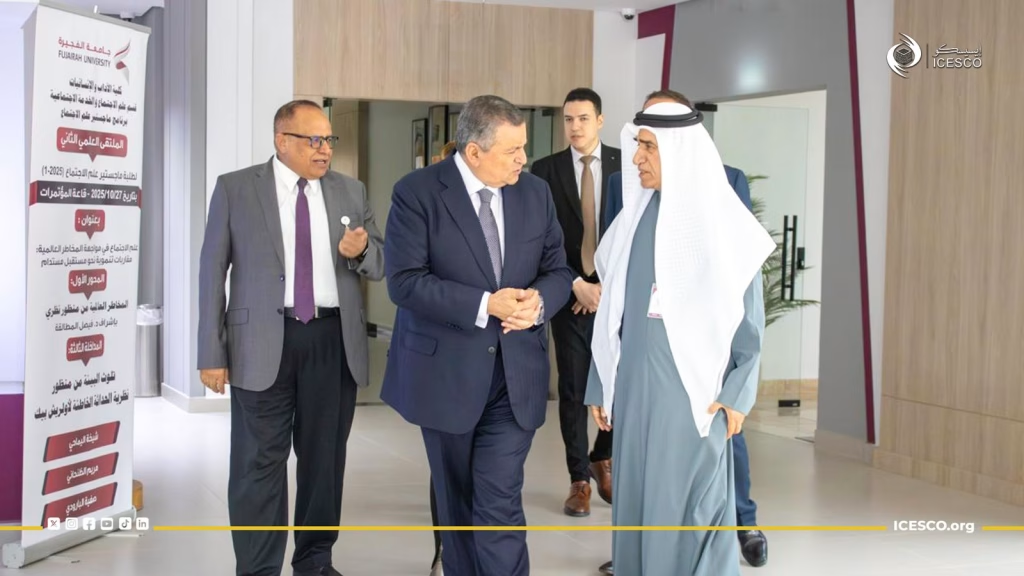
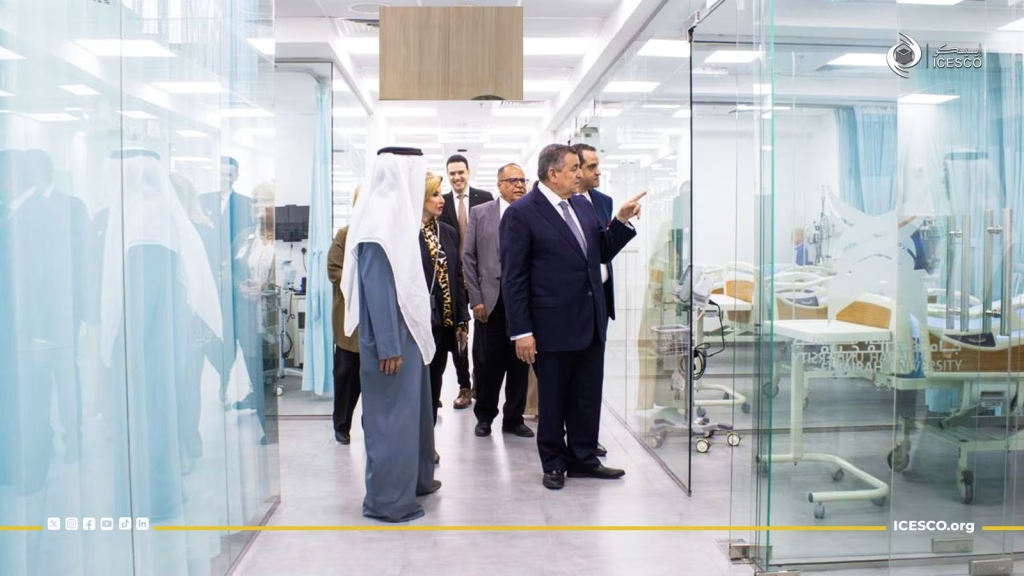
    The Islamic World Educational, Scientific and Cultural Organization (ICESCO) and Fujairah University in the United Arab Emirates explored avenues of cooperation in media literacy, building the capacities of media professionals and content creators across the Islamic world, and promoting ethical AI use in the media field. The two parties discussed cooperation during a meeting at the University’s headquarters on Wednesday, February 11, 2026, between Dr. Sulaiman Al Jassim, Chancellor of the University of Fujairah, and Mr. Osama Heikal, Director of ICESCO’s Media and Communication Sector.

    The two parties reviewed opportunities for cooperation between the Organization and the University, particularly in strengthening media literacy, with the aim of protecting younger generations against the influx of fake news and misleading information. They also stressed the need to equip students and youth with critical thinking and analytical skills to navigate the growing volume of digital content with responsibility and awareness.

    For his part, Mr. Heikal stressed the importance of shaping media messages amid the rapid surge in AI technologies, highlighting the need for an ethical framework that maximizes AI’s benefits in media while upholding professional standards and moral principles.

    In this regard, the ICESCO official stated that the Riyadh Charter for Artificial Intelligence in the Islamic World, launched by ICESCO in partnership with the Saudi Data and Artificial Intelligence Authority (SDAIA), provides a roadmap for developing AI technologies in harmony with the ethical values and principles of the Islamic world.

    For his part, Dr. Al Jassim expressed keen interest in partnering with ICESCO’s Media and Communication Sector to support the ongoing comprehensive development measures at the University’s College of Communication, set to roll out in the coming months.

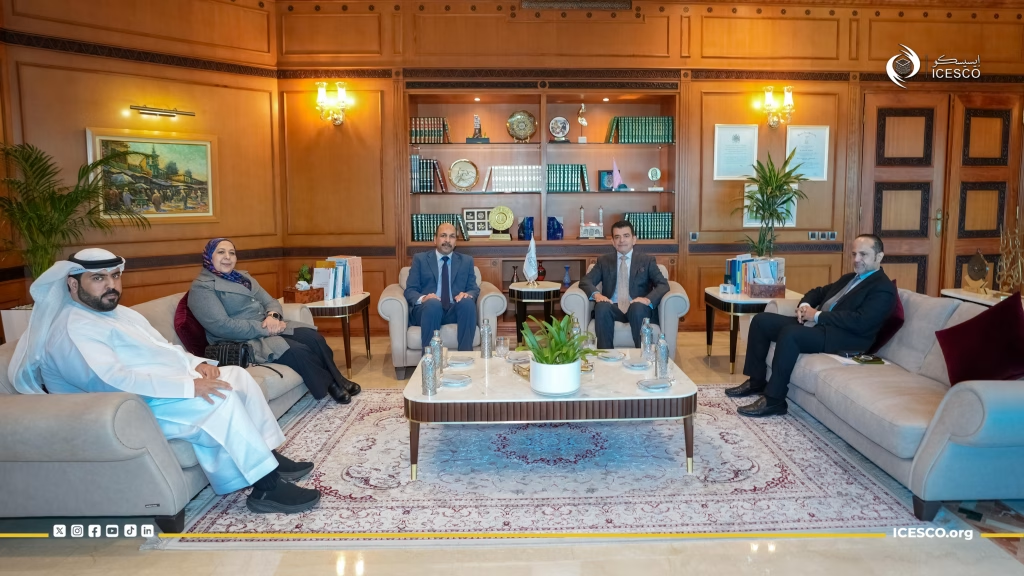
    ICESCO Director-General Receives President of the Arab Federation for Libraries and Information to Discuss Prospects for Cooperation

    Dr. Salim M. AlMalik, Director-General of the Islamic World Educational, Scientific and Cultural Organization (ICESCO), received Dr. Imad Issa Saleh, President of the Arab Federation for Libraries and Information (AFLI), and the accompanying delegation to discuss prospects for joint cooperation in the fields of translation, publishing, and support for national libraries in Member States. The meeting took place on Thursday, 12 February 2026, at the Organization’s headquarters in Rabat.

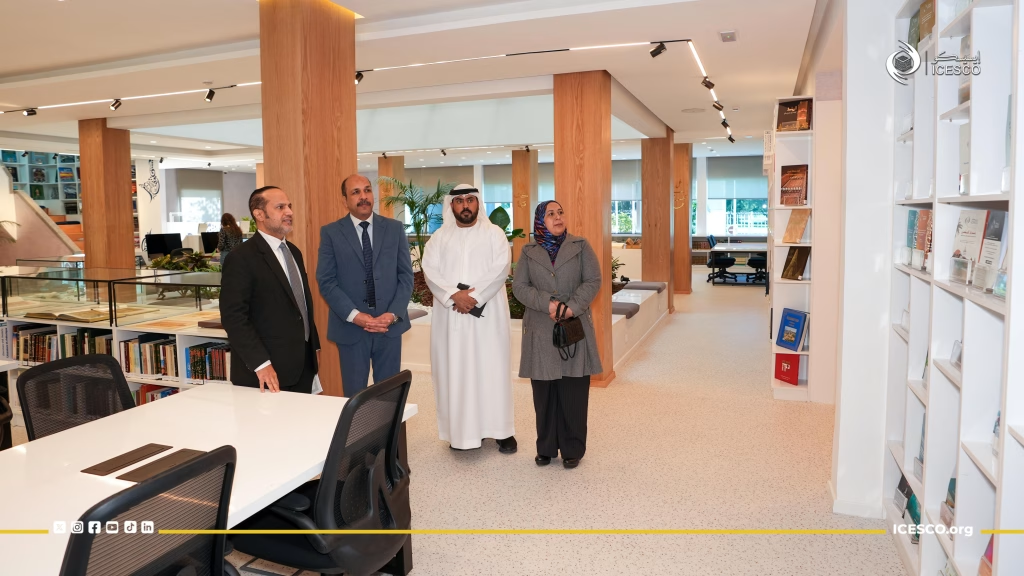
    At the beginning of the meeting, Dr. AlMalik reviewed ICESCO’s vision, strategic orientations, and the most prominent programs and initiatives it offers for the benefit of its Member States, especially in the fields of translation and knowledge dissemination. He also noted that ICESCO is currently finalizing arrangements to inaugurate the Sultan Qaboos Library (may Allah have mercy on him), hosted at the Organization’s headquarters after being modernized and equipped with the latest technologies, in addition to a collection of rare books and documents.

    Dr. AlMalik stated that ICESCO is forging distinguished partnerships with leading national libraries across the countries of the Islamic world, noting the Organization’s willingness to host major conferences convened by the Federation and to participate in their organization, thereby helping broaden the Federation’s impact throughout the Islamic world.

    For his part, Dr. Imad Saleh presented an overview of the Federation, headquartered in Tunisia, outlined its main areas of work, and expressed the Federation’s keenness to cooperate with ICESCO in light of its pivotal role in the fields of education, science, and culture in the Islamic world, as well as to benefit from the Organization’s expertise in advancing knowledge.

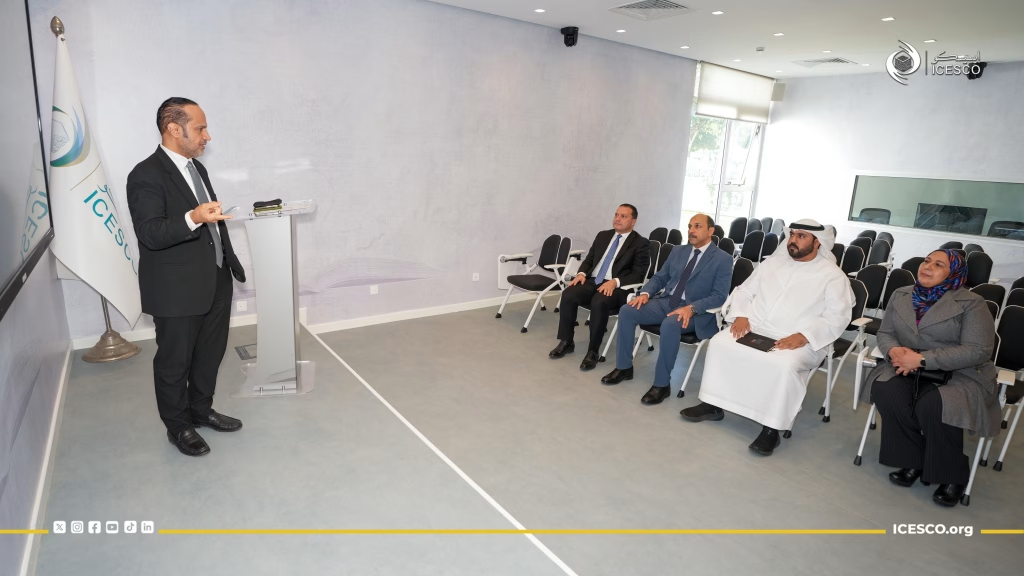
    The meeting discussed several proposed programs and projects, including capacity building for publishing professionals, the issuance of specialized knowledge series and technical studies, technical cooperation in cataloguing and drafting reference guides for libraries, and digitizing historical documents.

    The meeting was attended by Dr. Ahmed Albanyan, Director of ICESCO’s Translation and Publishing Center; Mr. Sultan Saif Khamis Said Al Mazrouei, Vice President of the Federation; and Ms. Badiaa Rahmouni, Member of the Executive Bureau.

    Following the meeting, the AFLI delegation toured the halls of the Sultan Qaboos Library. An expanded meeting was then held with the participation of Dr. Albanyan and Dr. Kais Hammami, Head of ICESCO’s Center for Foresight and Artificial Intelligence, during which in-depth discussions took place on programs and projects proposed for implementation between the two sides.

    117 New Cultural Sites and Elements Inscribed on ICESCO’s Islamic World Heritage Lists

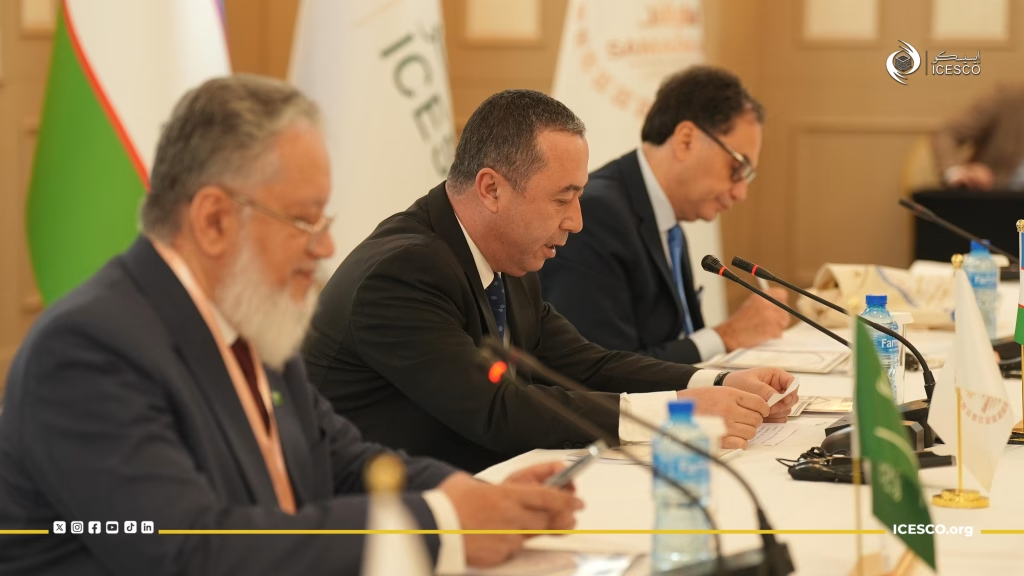
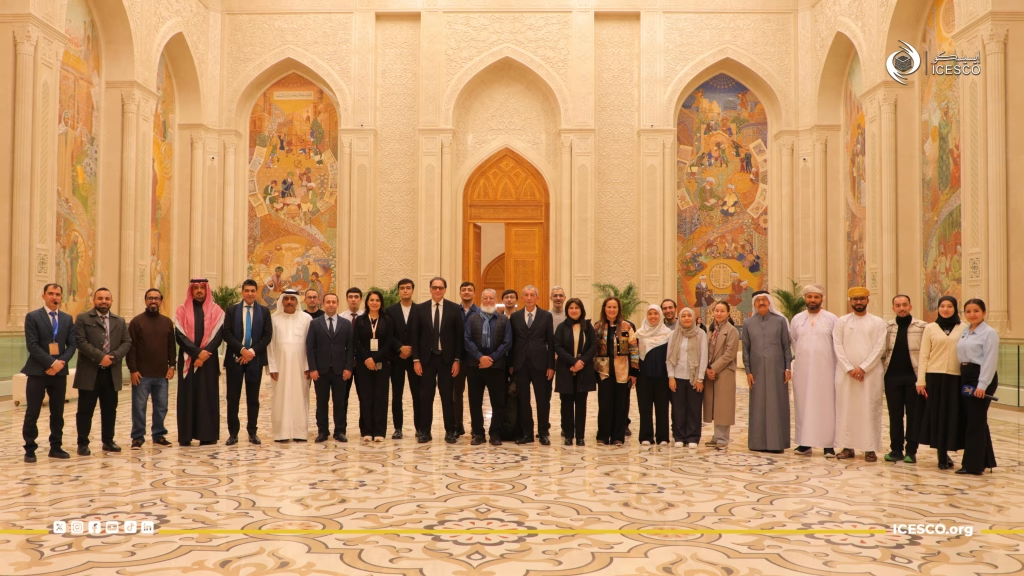
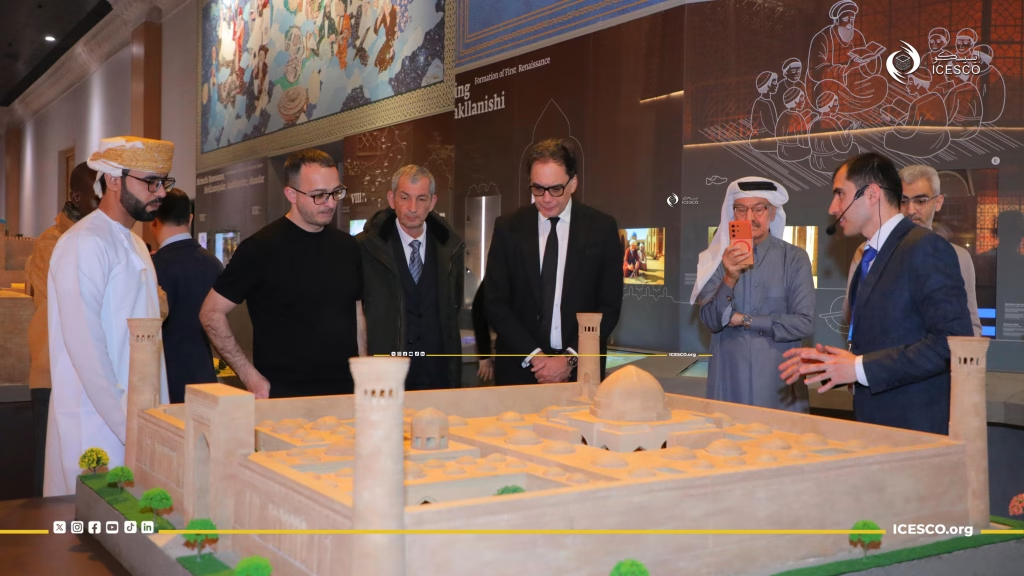
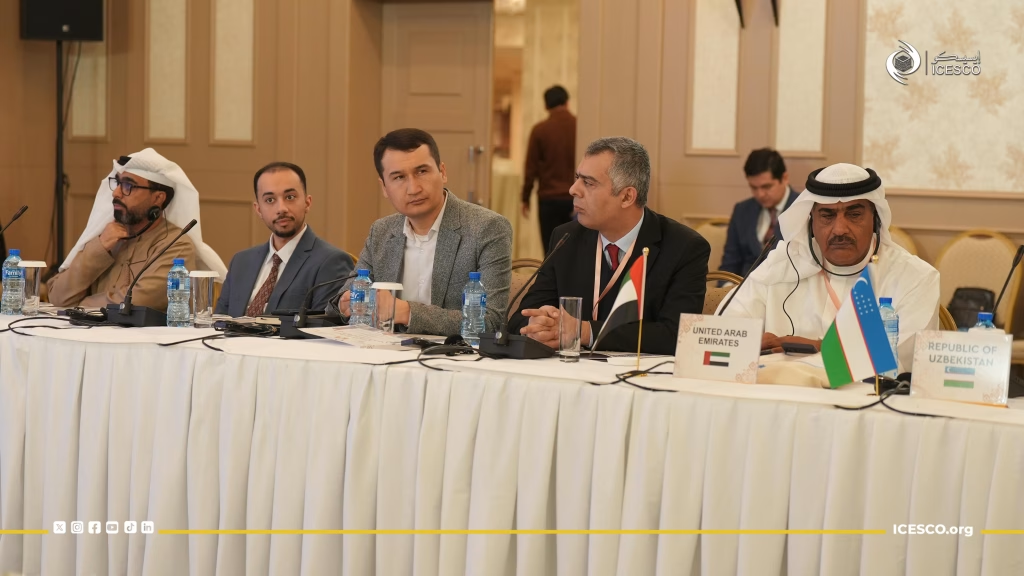
    The Islamic World Heritage Committee concluded its 13th meeting, held in Tashkent, Uzbekistan, from 10 to 12 February 2026, announcing the inscription of 117 new historical sites and cultural elements on ICESCO’s Islamic World Heritage Lists from 16 countries, bringing the total number of sites and elements inscribed on ICESCO’s Heritage Lists to 841 cultural and civilizational sites and elements.

    The meeting considered the proclamation of Samarkand as the Culture Capital in the Islamic World for 2025 and discussed and adopted a number of strategic decisions and documents. The Committee adopted the vision of the ICESCO Islamic World Heritage Center, followed up on the implementation of the decisions of the Committee’s previous meeting and the recommendations of the Conference of Ministers of Culture in Jeddah, and approved the document on the “Islamic World Heritage Portal Initiative.”

    At the close of its meeting, the Committee issued a set of recommendations, including updating the Heritage Portal, intensifying technical support missions to Member States for the preparation of nomination files, adopting best management practices for the preservation of cultural sites and elements, developing a communication strategy to publicize the elements inscribed on the ICESCO Heritage List, and developing a set of strategies to address the impact of climate change on heritage and the protection of heritage in situations of conflict.

    The meeting kicked off with an address by Dr. Salim M. AlMalik, ICESCO Director-General, delivered on his behalf by Dr. Mohamed Zinelabidine, Head of the Organization’s Culture Sector, in which he affirmed ICESCO’s commitment to protecting heritage in light of circumstances that place a major cultural responsibility on everyone, given that the Islamic world’s heritage represents no more than 11% of the World Heritage List, whereas more than 62% of the sites included on the List of World Heritage in Danger are found in Member States.

    For his part, Eng. Mohammed Al-Aidarous, Chairman of the Islamic World Heritage Committee, stressed the need to adopt a proactive approach to address the under-representation of Islamic world heritage on world lists and to protect endangered sites.

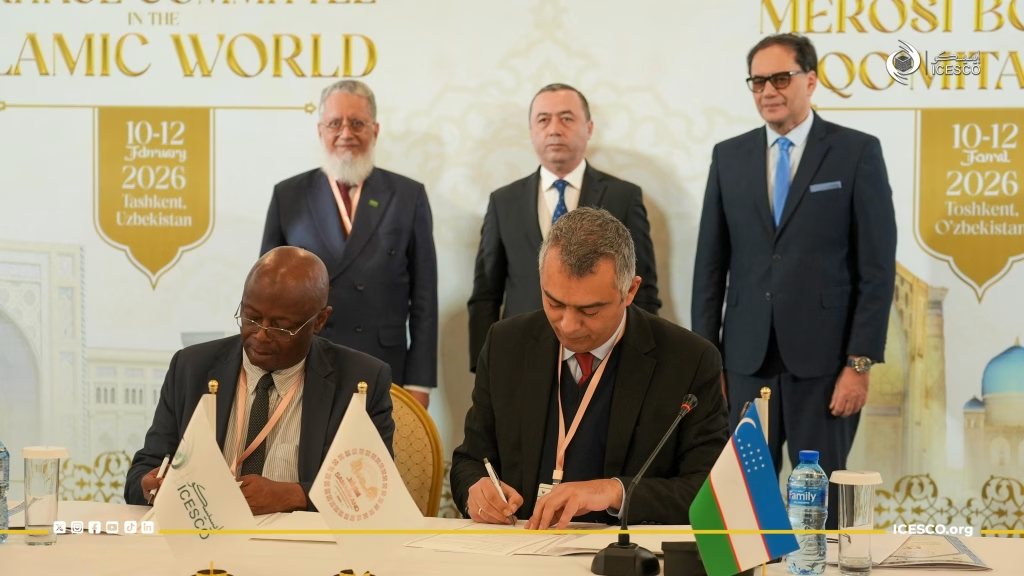
    On the sidelines of the meeting, Dr. Webber Ndoro, Director of the ICESCO Islamic World Heritage Center, and Mr. Everin Rutbl, Director of the International Institute of Central Asian Studies (IICAS), signed a memorandum of understanding with a view to building cooperation in preserving and exploring the rich heritage of Central Asia and developing cultural ties among the peoples of the region.

    ICESCO, AGFUND Discuss Launching Initiatives to Support Development Media

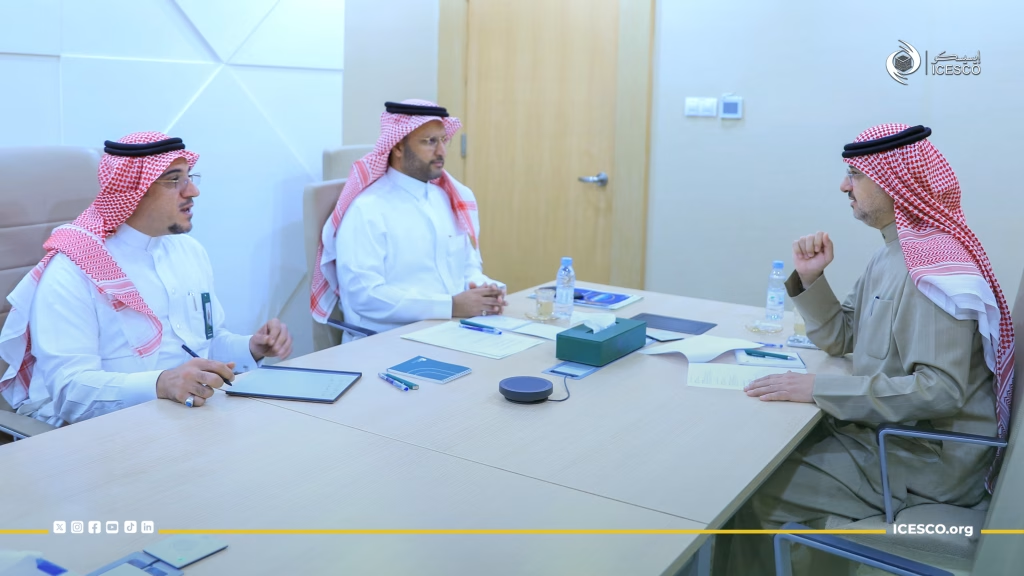
    The Islamic World Educational, Scientific and Cultural Organization (ICESCO) and the Arab Gulf Programme for Development (AGFUND) discussed ways to strengthen their strategic partnership under the memorandum of understanding signed between the two parties, with the aim of implementing joint programs to support the education sector in Sudan and vulnerable groups in Syria, and to enhance cooperation in development media.

    This came during a coordination meeting held on Tuesday, 10 February 2026, at the headquarters of the Arab Open University in Riyadh, bringing together Dr. Barakat Al Wegyan, Head of the Communication Division at ICESCO’s Media and Communication Sector, and Hammam bin Juraid, CEO of AGFUND.

    During the meeting, the two sides underlined the importance of media and communication as key instruments in supporting the implementation of joint development programs and the role of development media in documenting the impact of these programs in advancing communities and strengthening international partnerships. They also discussed the possibility of implementing training programs for journalists and content creators in the Member States.

    The two parties agreed to maintain coordination and to hold an expanded meeting at ICESCO headquarters in Rabat to examine mechanisms for implementing the proposed programs and initiatives.

    In a related context, Dr. Barakat Al Wegyan discussed with Dr. Mohammad Ibrahim Al-Zakari, President of the Arab Open University, prospects for joint cooperation, particularly in implementing specialized training programs through the University’s branches in several Arab countries.

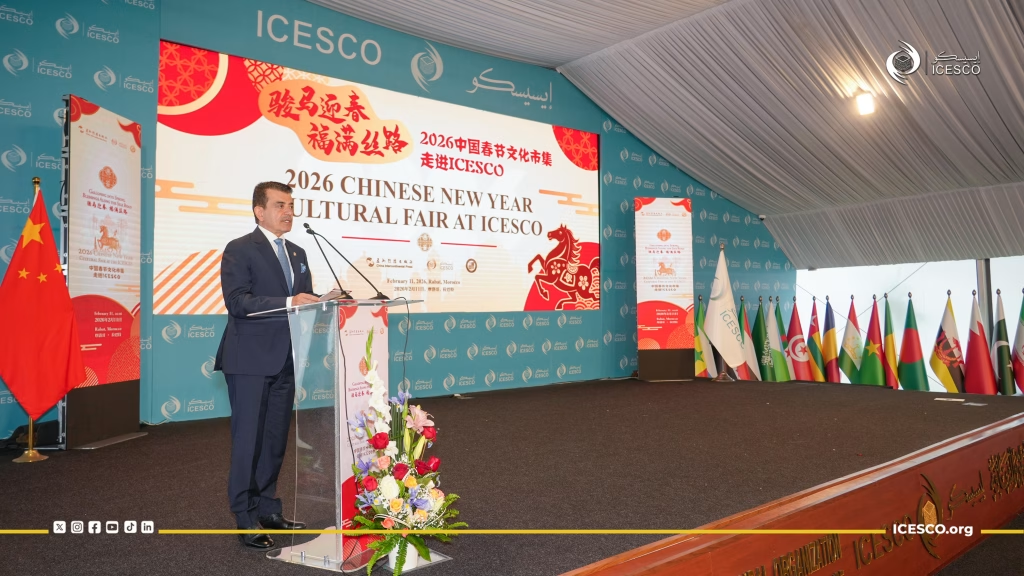
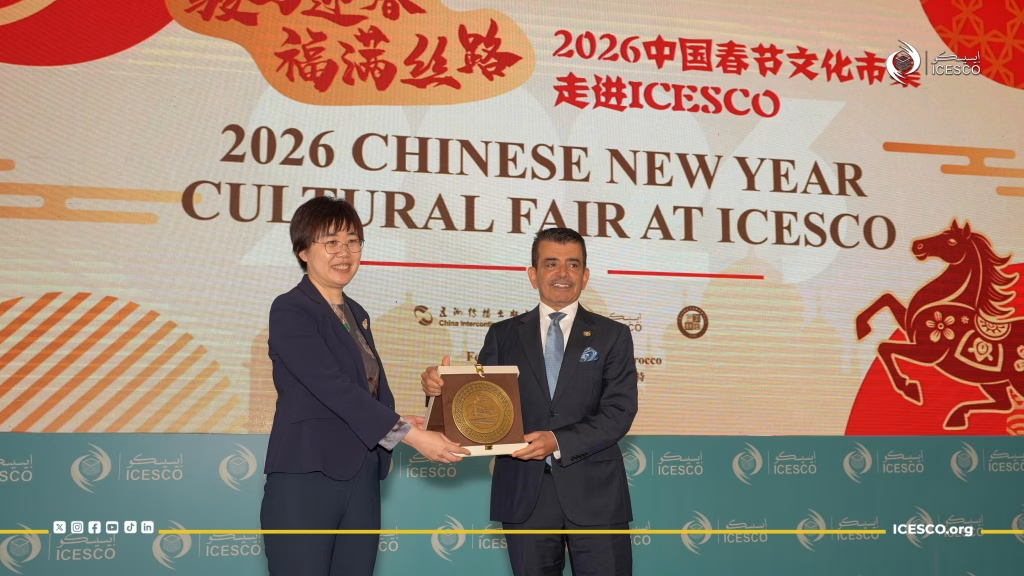
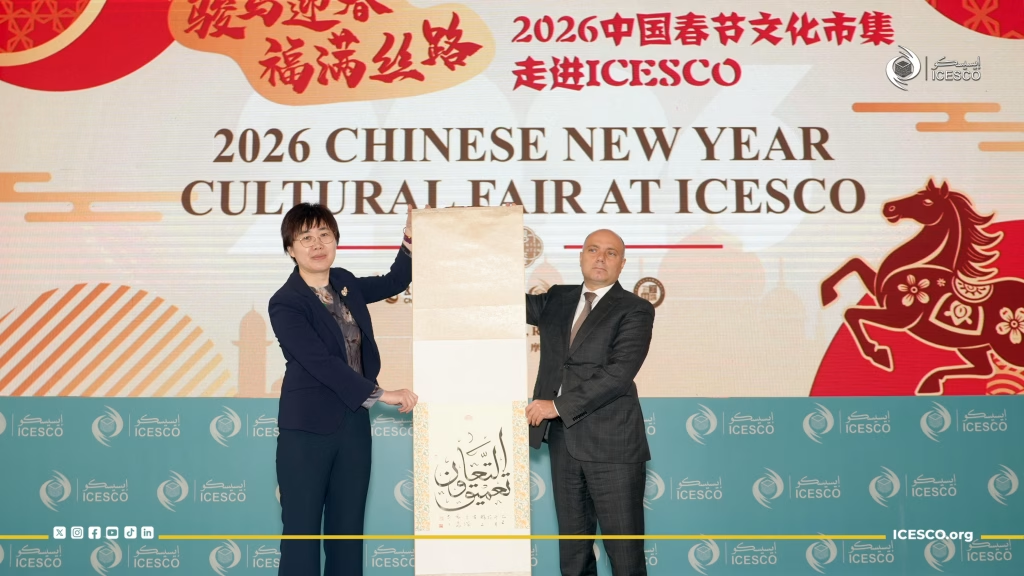
    ICESCO Celebrates Chinese Spring Festival 2026, Emphasizing the Role of Culture in Bringing Peoples Together

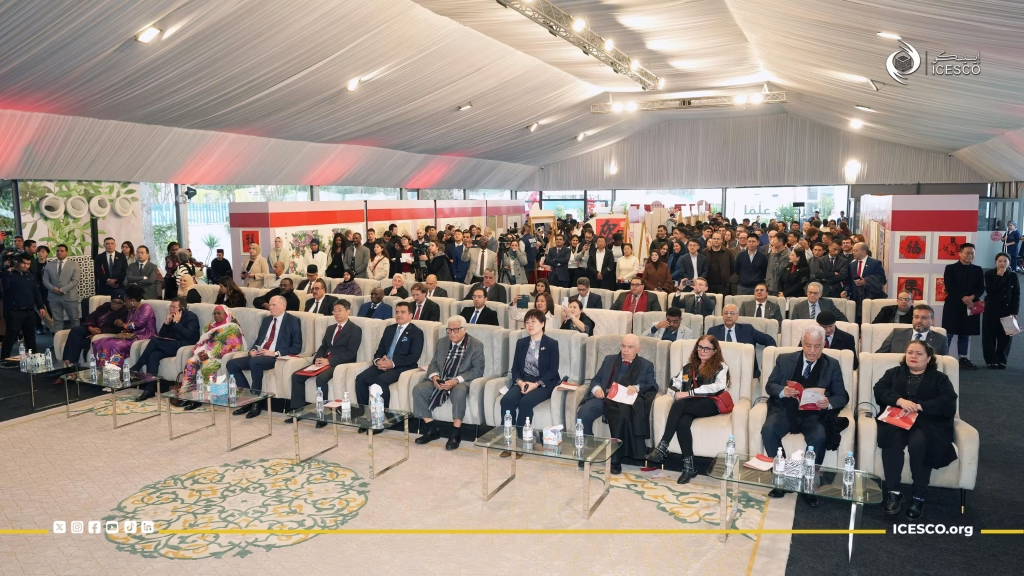
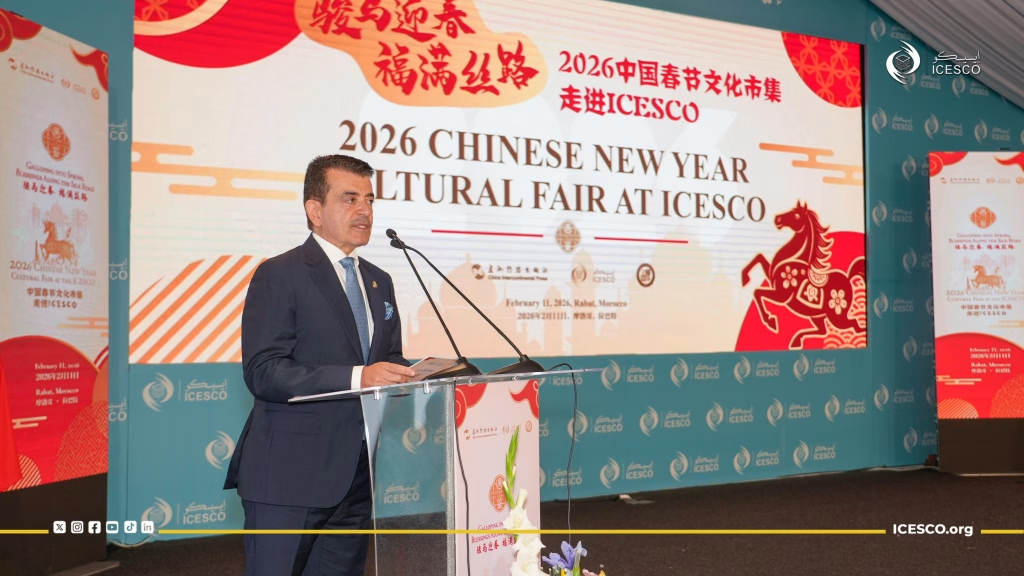
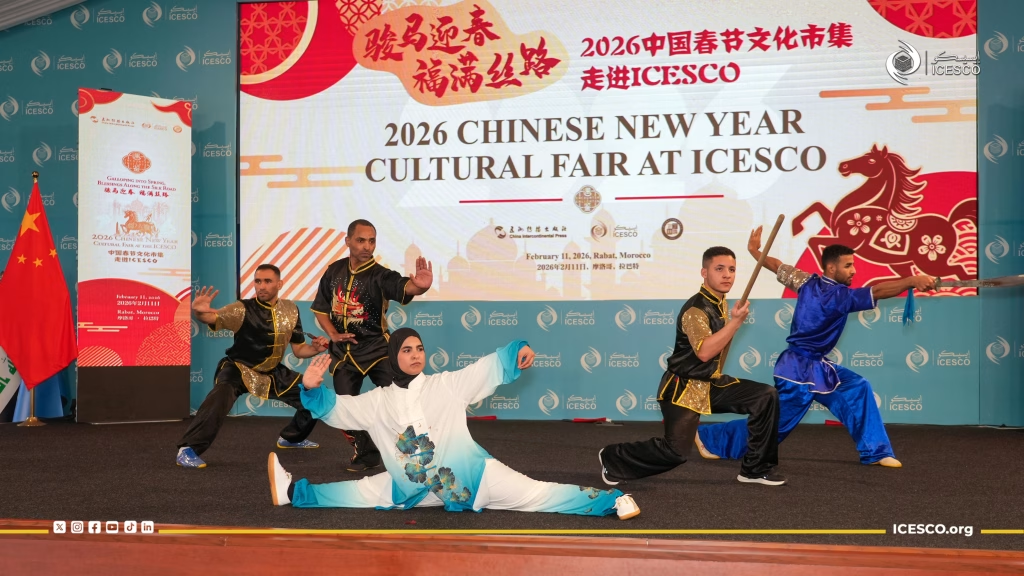
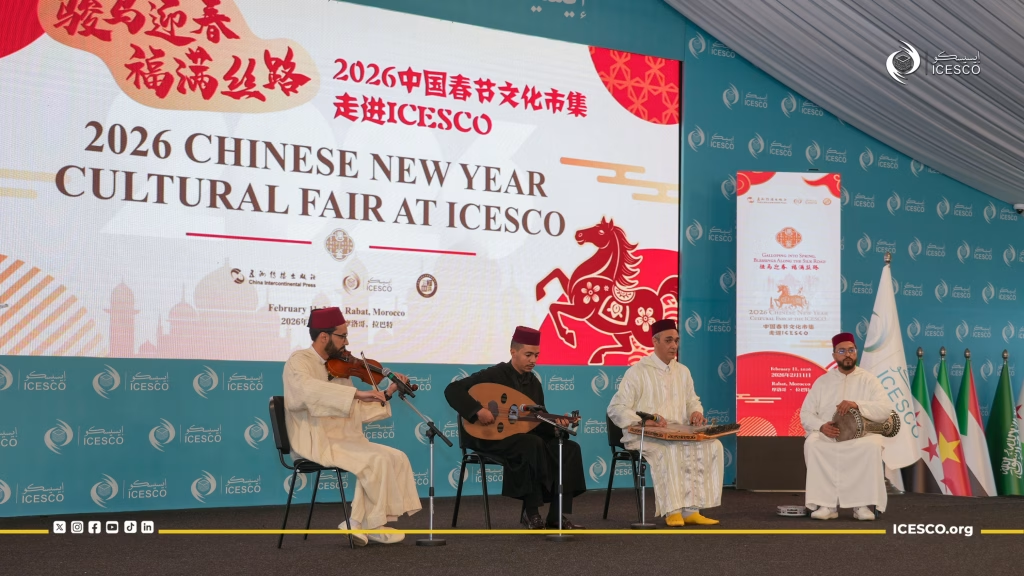
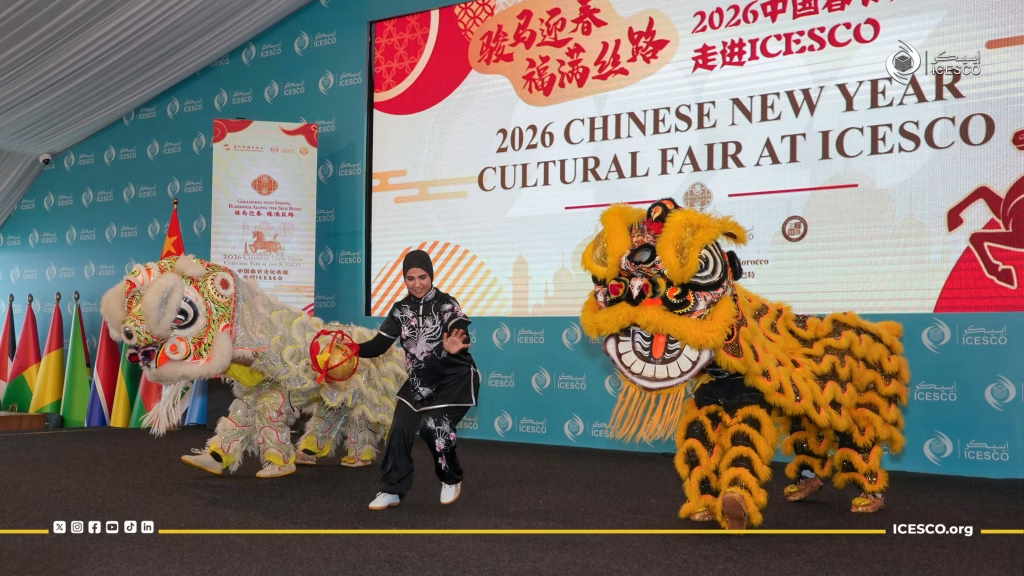
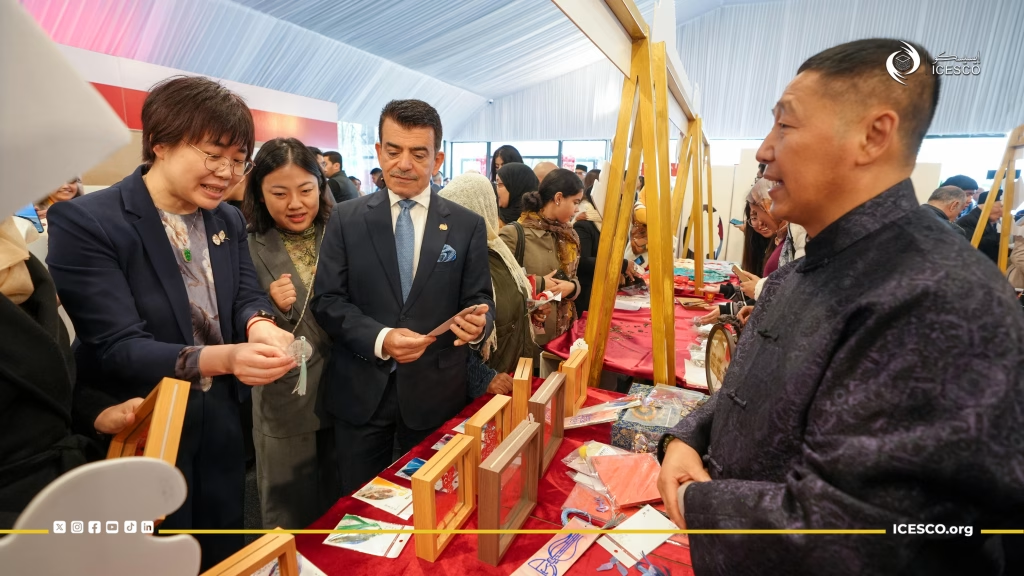
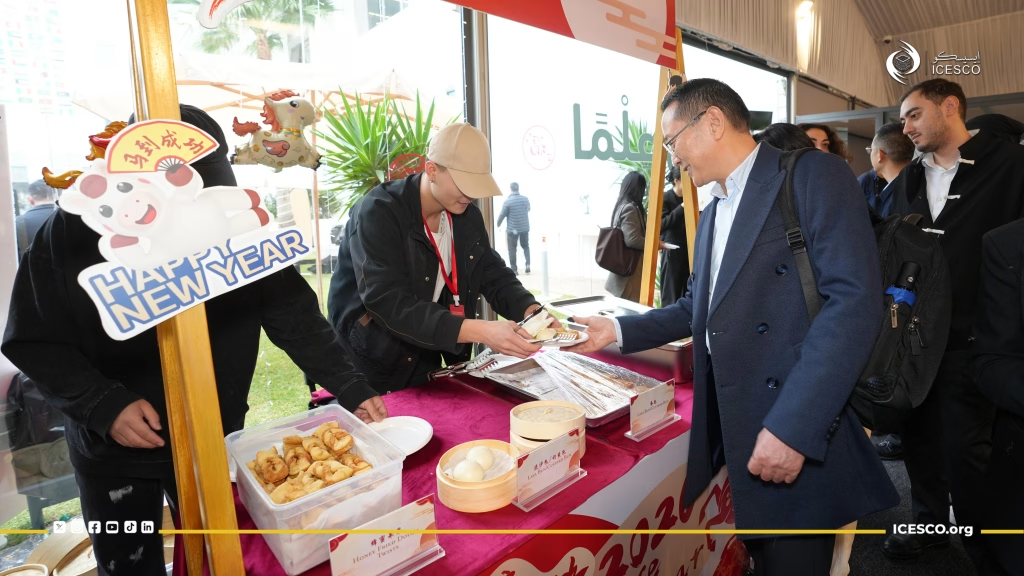
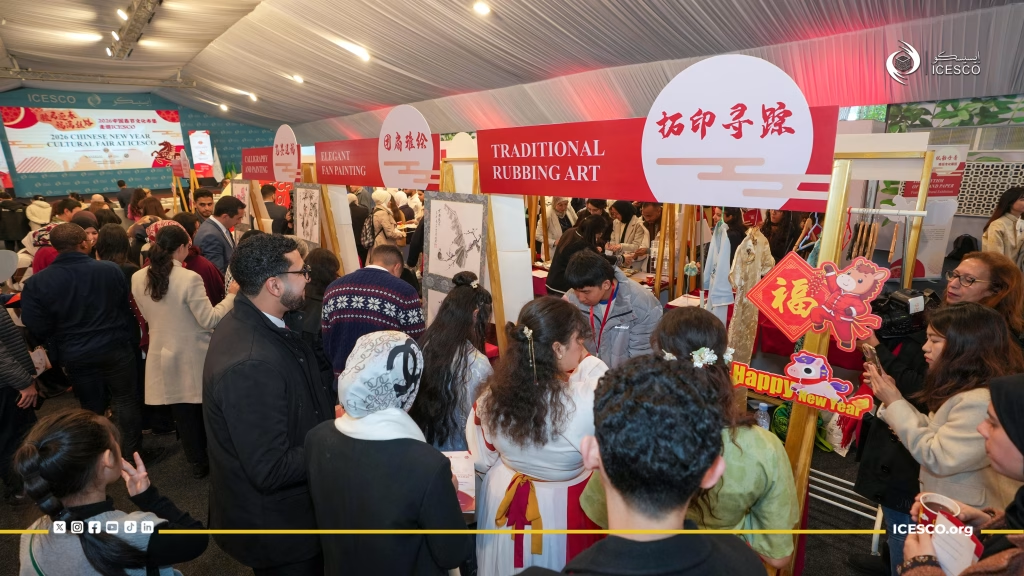
    The headquarters of the Islamic World Educational, Scientific and Cultural Organization (ICESCO) in Rabat hosted an international cultural event on Wednesday, 11 February 2026, celebrating the Chinese Spring Festival 2026. The event featured a cultural exhibition, performances of traditional Chinese folk dances, and musical segments using instruments rooted in the heritage of the Islamic world, creating an atmosphere that reflected the spirit of harmony between the Islamic world and Chinese civilization.

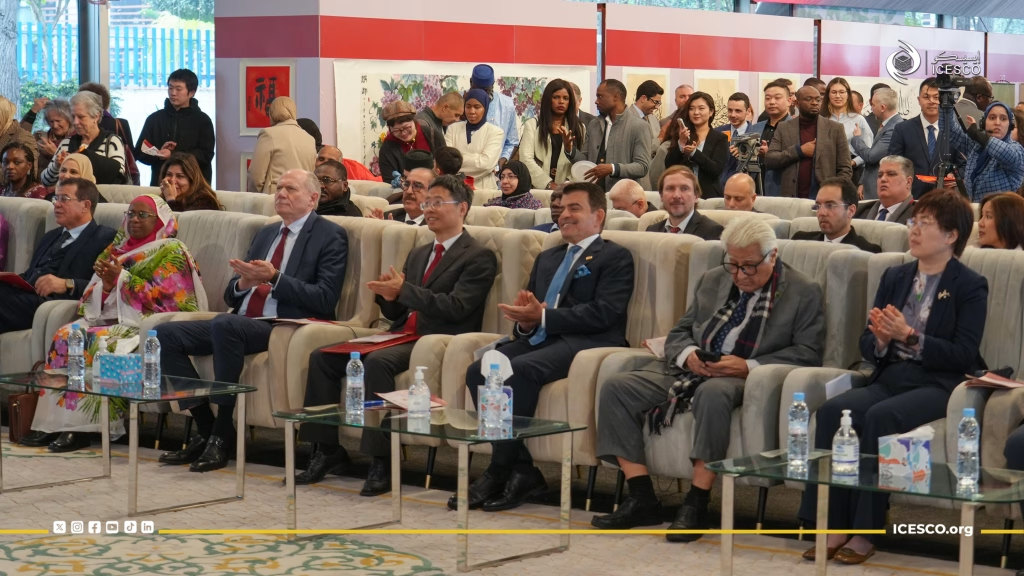
    The celebration was organized in partnership with China Intercontinental Press and the Institute of Silk Road Strategic Studies at Shanghai International Studies University, and was attended by several ambassadors and representatives of diplomatic missions accredited to the Kingdom of Morocco.

    In his opening address, Dr. Salim M. AlMalik, ICESCO Director-General, stressed that the event embodies a relationship built on mutual respect and fostered by the power of civilizational dialogue, noting that cooperation between ICESCO and China continues to grow, as it is founded on trust and a shared belief in the role of knowledge in connecting peoples and bringing them closer together.

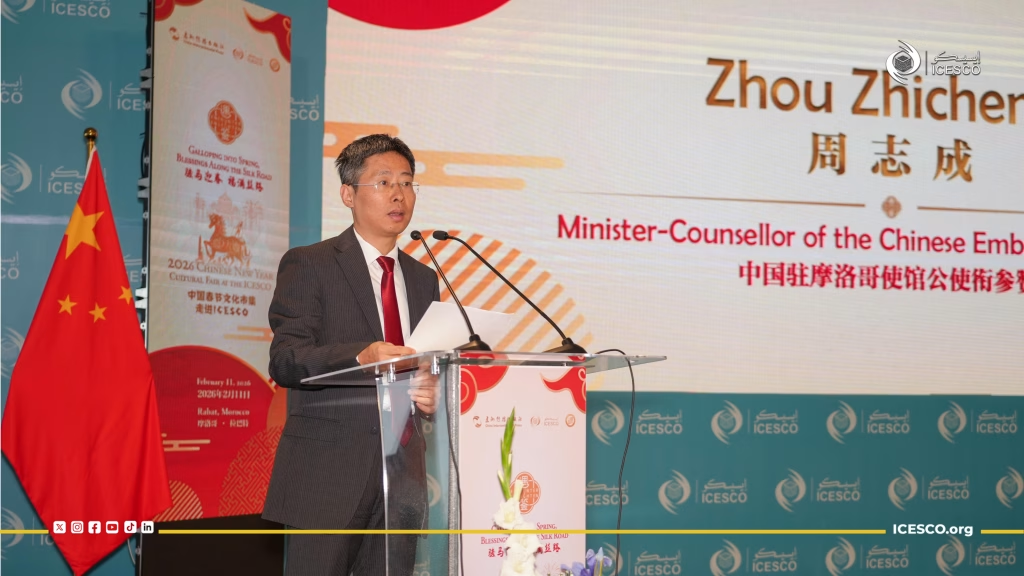
    For his part, Zhou Zhicheng, Minister-Counselor of the Embassy of the People’s Republic of China in the Kingdom of Morocco, commended the role of ICESCO in promoting cooperation and exchange in the fields of education, science, and culture, and in supporting intercultural dialogue, affirming his country’s readiness to strengthen partnership and joint action to safeguard cultural diversity.

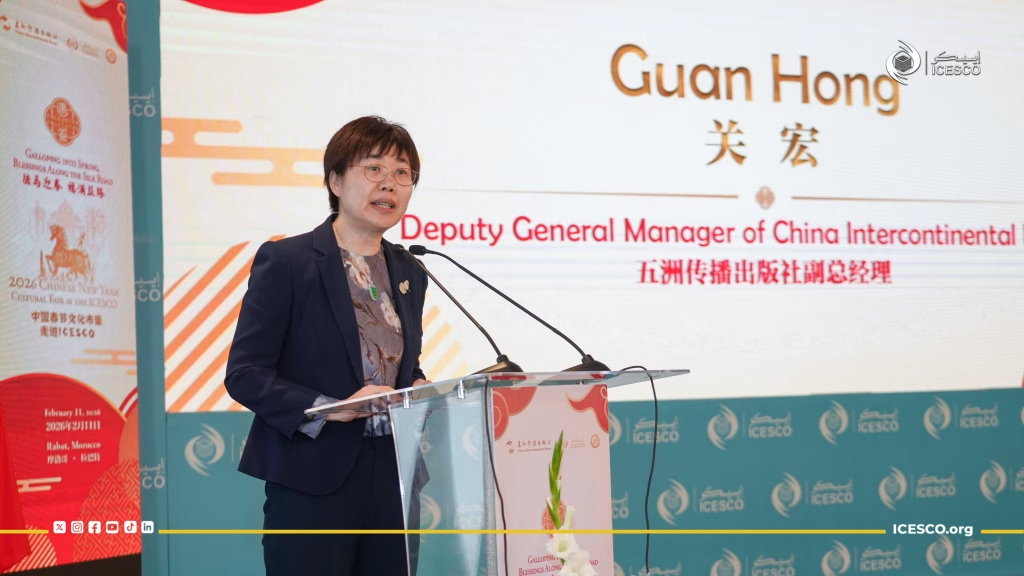
    In turn, Guan Hong, Deputy General Manager of China Intercontinental Press, stated that the event reflects shared values and longstanding bonds of friendship between China and the Islamic world, noting that the activities and exhibits showcase respect for cultural diversity and open broader prospects for cooperation between the two sides.

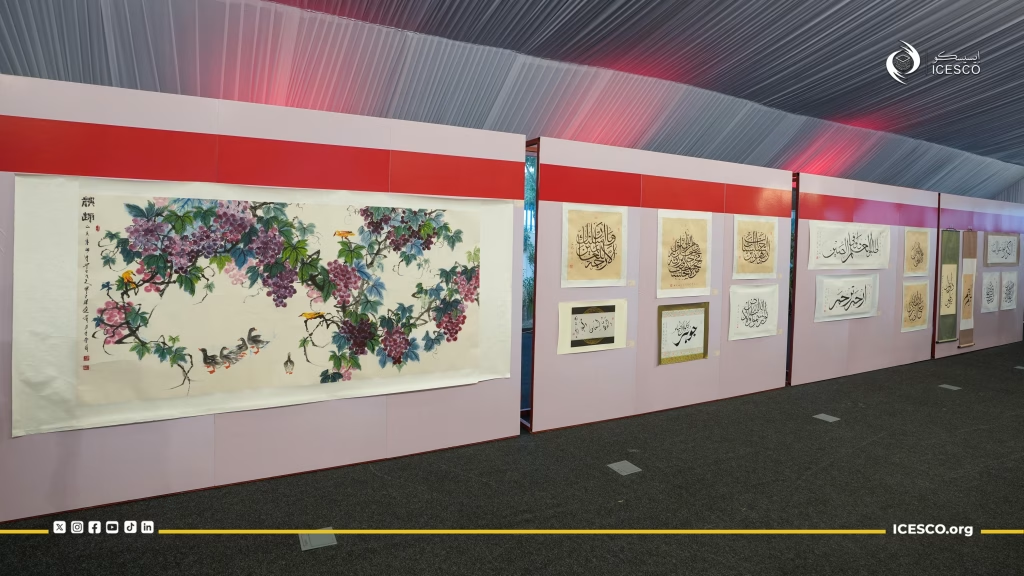
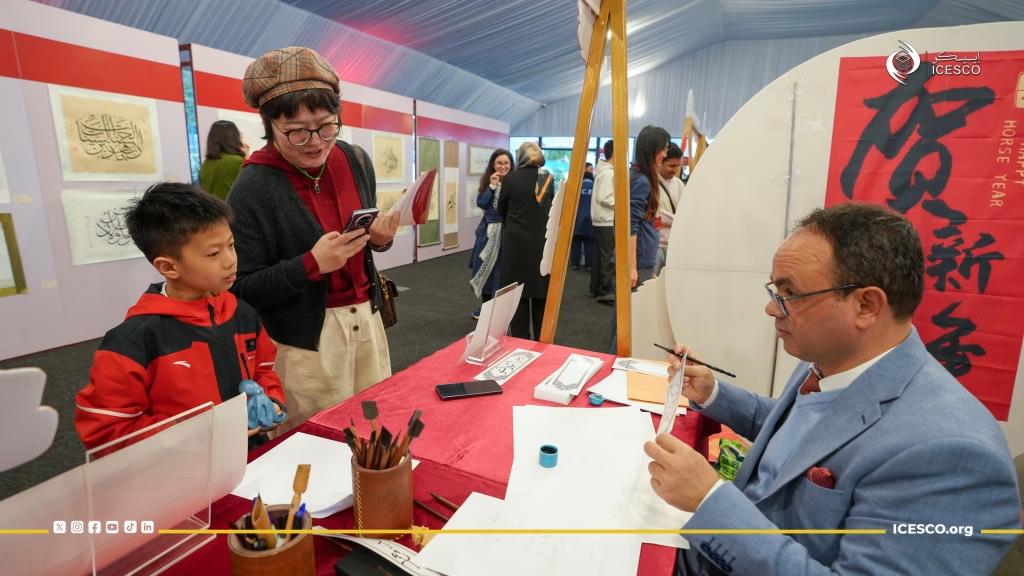
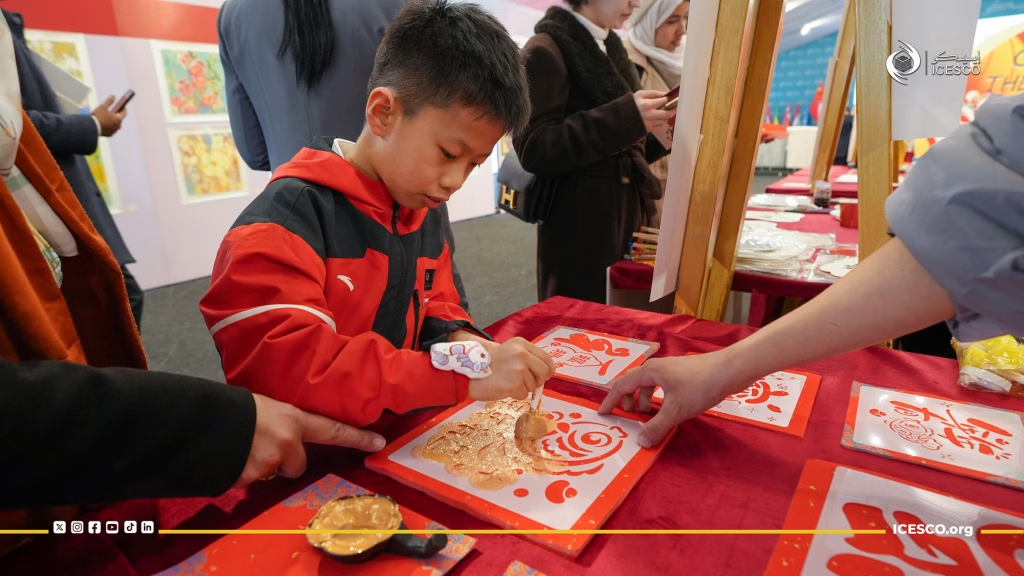
    Following the opening, Dr. AlMalik and distinguished guests toured the exhibition accompanying the celebration. The exhibition featured several pavilions highlighting calligraphy, painting, traditional crafts, and a variety of popular dishes, in addition to interactive cultural experiences that demonstrated the richness of Chinese heritage and the depth of civilizational exchange.

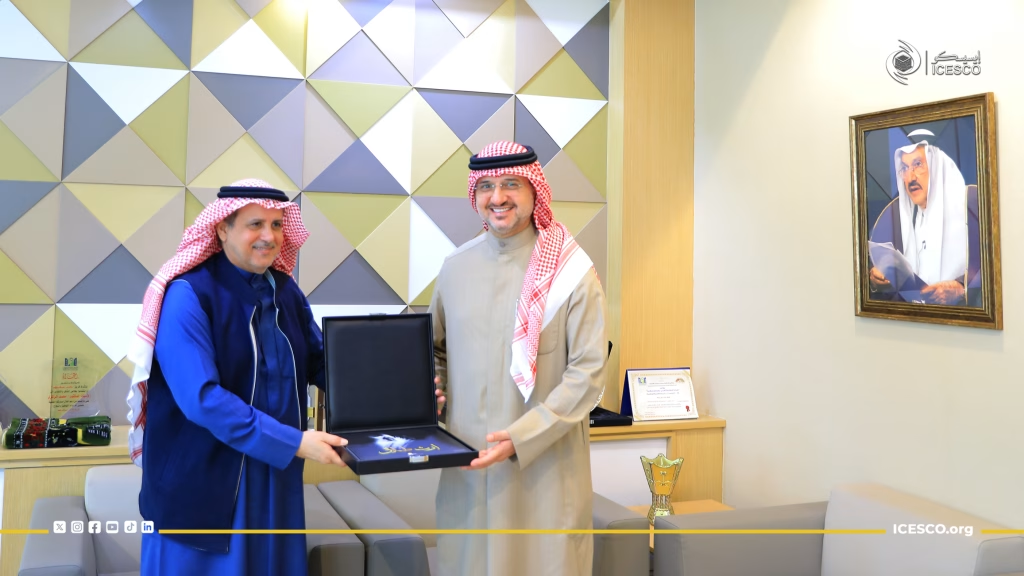
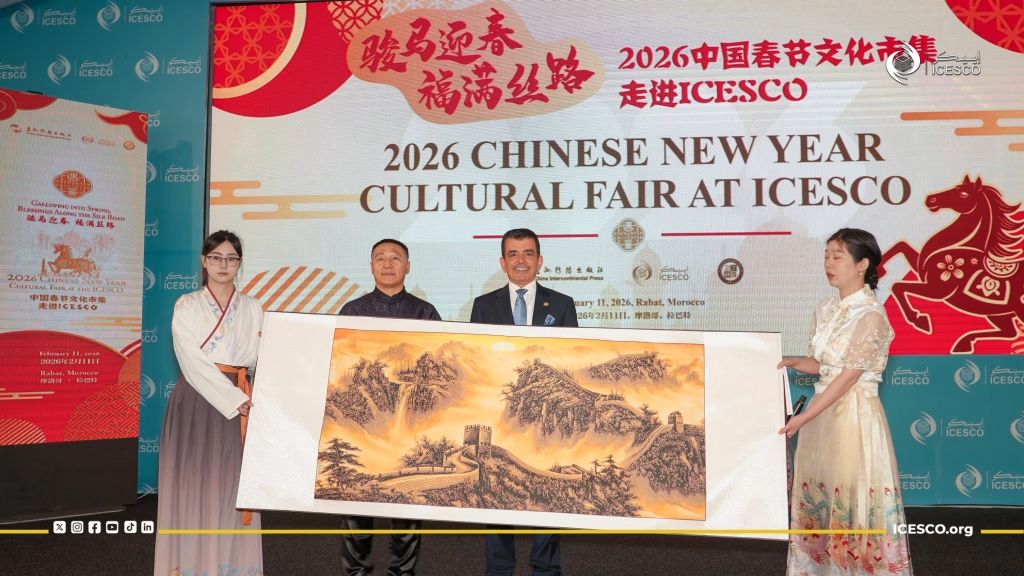
    The ceremony also included a tribute to Dr. AlMalik by the Chinese side in recognition of his efforts in promoting civilizational dialogue and bringing peoples closer through culture. ICESCO, in turn, honored its partners with a commemorative shield in appreciation of their role in supporting cultural diplomacy and strengthening channels of communication between the Islamic and Chinese cultural spheres.